
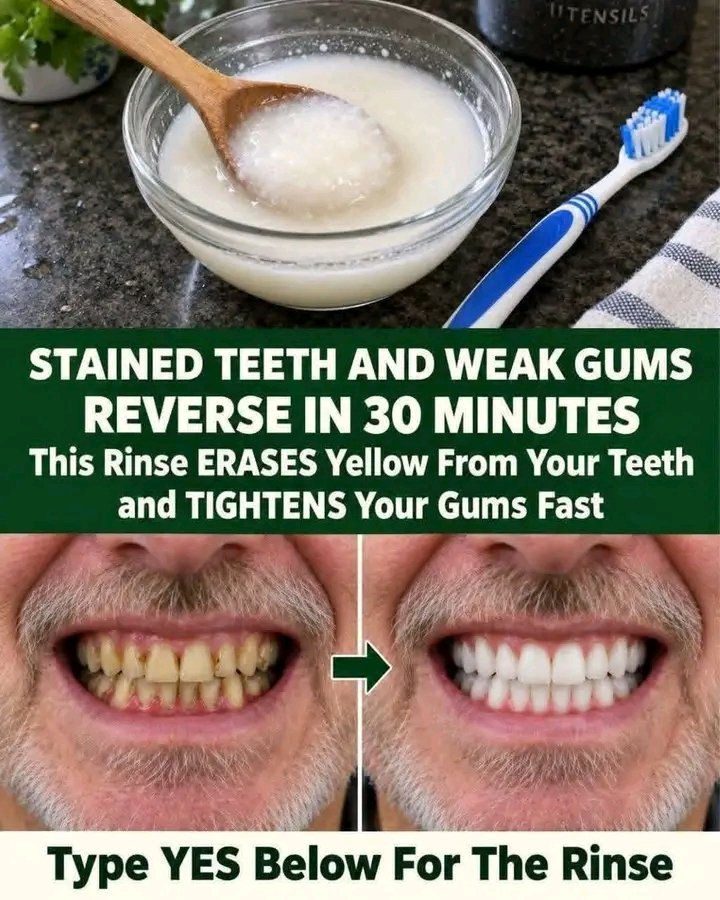
Can a Homemade Mouth Rinse Whiten Yellow Teeth and Strengthen Gums? What You Should Know
Yellow teeth and sensitive or bleeding gums are common dental concerns. Many people search for simple home remedies that promise a brighter smile without expensive treatments. However, claims that a homemade rinse can remove stubborn stains, strengthen weak gums, and transform your smile in just 30 minutes are not supported by reliable scientific evidence.
The good news is that simple daily habits can help keep your teeth clean, your gums healthier, and your smile looking its best.
Why Do Teeth Become Yellow?
Tooth discoloration can happen for several reasons, including:
- Food and drinks: Coffee, tea, red wine, and certain foods can leave surface stains.
- Tobacco use: Smoking and other tobacco products can cause noticeable discoloration.
- Plaque buildup: Inadequate brushing and flossing can allow plaque and tartar to accumulate.
- Natural aging: Tooth enamel gradually wears down, making the naturally yellowish layer underneath more visible.
- Dental conditions: Some medications and certain dental problems can also affect tooth color.
Identifying the cause is important because surface stains and deeper discoloration require different approaches.
Is There a Homemade Rinse That Works in 30 Minutes?
There is no proven homemade mouth rinse that reliably removes significant tooth staining and strengthens weakened gums in just 30 minutes.
Some rinses can help with specific oral health needs, but they cannot replace brushing, flossing, professional cleaning, or treatment for gum disease.
Be cautious with online recipes that recommend undiluted hydrogen peroxide, lemon juice, vinegar, or other acidic or abrasive ingredients. Improper use may irritate gum tissue, damage enamel, or increase tooth sensitivity.
Safe Ways to Brighten Your Smile at Home
1. Brush Twice a Day
Brush for two minutes, twice daily, with a soft-bristled toothbrush and fluoride toothpaste. Use gentle circular movements rather than scrubbing aggressively, which can irritate gums and contribute to gum recession.
2. Clean Between Your Teeth
Use dental floss or appropriately sized interdental brushes once a day. These tools remove plaque from areas that a toothbrush cannot easily reach.
3. Choose a Suitable Whitening Product
Whitening toothpaste may help reduce some surface stains. Whitening strips containing approved bleaching ingredients can lighten teeth more noticeably when used according to their instructions.
However, whitening products can cause temporary sensitivity or gum irritation. Ask your dentist before using them if you have cavities, exposed tooth roots, crowns, veneers, or persistent sensitivity.
4. Rinse With Water After Staining Drinks
After drinking coffee or tea, rinse your mouth with plain water. If you consume acidic drinks, wait about 30–60 minutes before brushing to reduce the risk of brushing softened enamel.
5. Protect Your Gum Health
Healthy gums should not regularly bleed during brushing or flossing. Use a soft toothbrush, clean between your teeth daily, and arrange a dental examination if bleeding persists.
When Is a Dentist Necessary?
Professional dental cleaning can remove hardened tartar and certain external stains that home brushing cannot remove. A dentist can also identify gum inflammation, cavities, enamel damage, and other causes of discoloration.
Seek dental care if your gums frequently bleed, swell, or recede, or if you have persistent bad breath or loose teeth. Facial swelling, fever with dental pain, or difficulty swallowing or breathing requires urgent medical or dental attention.
Final Thoughts
A brighter smile does not require believing every viral dental hack. No homemade rinse has been proven to whiten teeth and strengthen weak gums in 30 minutes.
For the best results, brush with fluoride toothpaste, clean between your teeth daily, avoid harmful DIY whitening ingredients, and seek professional advice when needed. These habits offer a safer, more reliable path toward a healthier smile than quick-fix promises.
Disclaimer: This article is for educational purposes only and is not a substitute for personalized dental advice.
Add SEO metadata and a stronger introduction