
Introduction
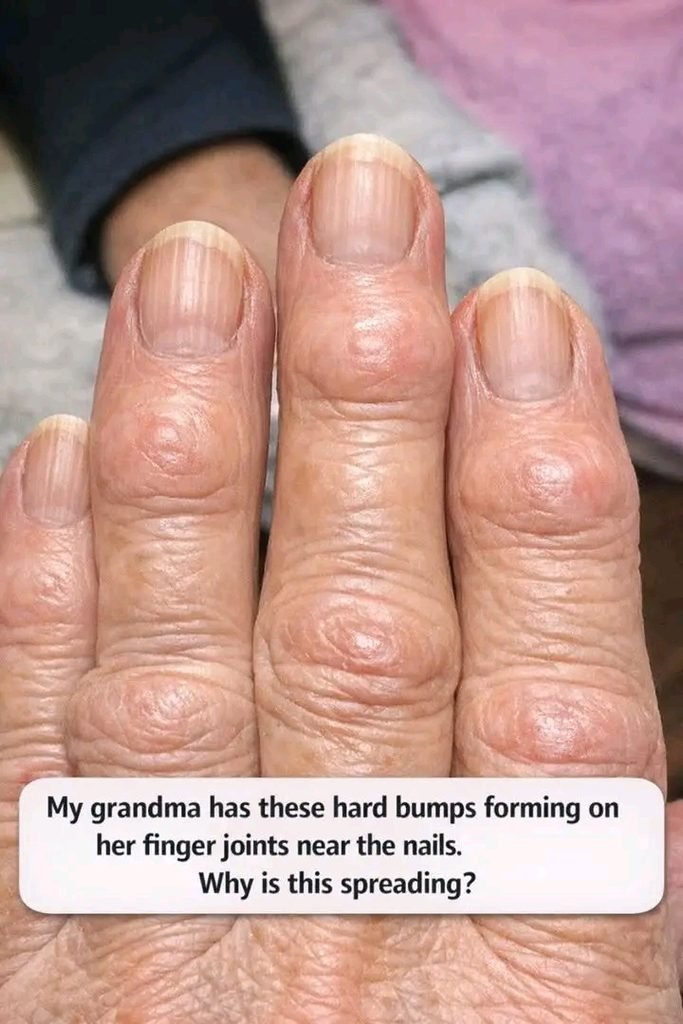
Hard bumps that develop on the finger joints near the nails are a common concern, particularly among older adults. These small, firm swellings may gradually appear on several fingers, sometimes accompanied by stiffness, discomfort, or changes in the shape of the joints. Although they can look alarming when they begin to spread, they are often associated with age-related changes in the joints rather than a contagious skin condition.
Understanding the possible causes of these bumps is essential for choosing the right treatment, protecting joint function, and knowing when medical attention is necessary.
What Causes Hard Bumps on Finger Joints?
One of the most common explanations is osteoarthritis, a degenerative joint condition that develops when the protective cartilage within a joint gradually wears down. As the joint changes, the body may form small bony enlargements around its edges.
When these enlargements develop in the joints closest to the fingernails, they are known as Heberden’s nodes. They typically feel hard, may appear on more than one finger, and can become increasingly noticeable over time.
These bumps may be associated with:
- Age-related changes in the joints.
- A family history of osteoarthritis.
- Previous joint injuries or repeated mechanical stress.
- Inflammation and changes in the surrounding joint structures.
Heberden’s nodes are not the only possible cause of finger bumps. Other conditions, including rheumatoid arthritis, psoriatic arthritis, and certain cysts, can produce swellings around the fingers. A medical examination is therefore important before assuming that every hard bump is caused by osteoarthritis.
Why Are the Bumps Spreading to Other Fingers?
When new bumps appear on several fingers, it may seem as though the condition is spreading from one joint to another. However, osteoarthritis is not contagious, and the bumps do not spread through physical contact.
Instead, several finger joints may develop degenerative changes independently over time. This can make the condition more visible as additional joints become affected.
Genetics, aging, previous injuries, and individual differences in joint structure may influence which fingers develop these changes. Some people experience only a few small bumps, while others develop more pronounced enlargements across multiple joints.
The progression is usually gradual, although discomfort and swelling may fluctuate. Not everyone with Heberden’s nodes experiences significant pain, and the size of a bump does not necessarily indicate how severe the underlying arthritis is.
Common Symptoms to Watch For
Hard bumps near the fingernails may occur alongside other symptoms, including:
1. Firm joint enlargements: The bumps often feel solid because they may involve changes in the underlying bone.
2. Joint stiffness: Fingers may feel stiff after waking up or after remaining inactive for an extended period.
3. Pain or tenderness: Some joints become painful, especially during periods of inflammation or when gripping objects.
4. Reduced flexibility: As the joint changes, bending or straightening the finger may become more difficult.
5. Visible changes in finger shape: The affected joints may appear enlarged, uneven, or slightly deformed over time.
Symptoms vary considerably. Some people have visible joint changes with little discomfort, while others experience pain and difficulty performing everyday tasks.
How Are These Bumps Diagnosed?
A healthcare professional can usually begin the assessment by examining the hands, asking about symptoms, and reviewing the person’s medical and family history.
An X-ray may be recommended when osteoarthritis is suspected or when the diagnosis is uncertain. It can reveal characteristic changes in the joint, including bony enlargements and narrowing of the joint space.
Blood tests are not routinely necessary to diagnose typical osteoarthritis, but they may be useful when the symptoms suggest an inflammatory condition such as rheumatoid arthritis.
It is particularly important to seek medical evaluation when the bumps appear suddenly, become very painful, feel hot, or are accompanied by significant redness or swelling. A rapidly changing joint should not automatically be attributed to aging.
Treatment Options for Hard Finger Joint Bumps
There is currently no treatment that reliably removes established bony nodes caused by osteoarthritis without an appropriate procedure. However, several approaches can help manage symptoms and preserve hand function.
1. Protect the Joints and Maintain Movement
Gentle finger movements can help maintain flexibility and reduce stiffness. A healthcare professional or hand therapist can recommend suitable exercises based on the person’s symptoms and joint function.
Avoid exercises that cause substantial pain, and do not force a stiff joint to bend beyond its comfortable range.
2. Use Warmth to Relieve Stiffness
Applying a comfortably warm compress may help ease stiffness and make the fingers feel more comfortable. Heat should not be applied to a joint that is acutely hot or significantly inflamed without appropriate medical advice.
3. Modify Daily Activities
Using larger-handled utensils, reducing excessive gripping, and taking regular breaks during repetitive tasks may help limit strain on painful joints.
Assistive devices can also make activities such as opening jars, fastening buttons, and preparing meals easier.
4. Consider Appropriate Pain Relief
Depending on the individual’s medical history, a clinician or pharmacist may recommend a topical anti-inflammatory medication or another suitable pain-relief option.
Older adults should be especially careful with oral anti-inflammatory medicines because they can increase the risk of stomach bleeding, kidney problems, and cardiovascular complications. Medication choices should account for existing conditions and other medicines being taken.
5. Seek Specialist Advice When Symptoms Persist
If pain, stiffness, or loss of function becomes substantial, a doctor may recommend assessment by a rheumatologist or hand specialist. In selected cases, further treatments or surgery may be considered, although surgery is generally reserved for persistent, function-limiting symptoms.
It is important to understand that treatment often focuses on relieving discomfort and improving function rather than making established bony bumps disappear.
Are Hard Bumps Near the Nails Always Osteoarthritis?
No. Although Heberden’s nodes are a common explanation, other conditions can produce similar-looking changes.
Digital mucous cysts, for example, may develop near the nail and can sometimes cause a groove or indentation in the nail. Psoriatic arthritis may affect the joints near the nails and can be associated with nail pitting, separation of the nail from its bed, or psoriasis elsewhere on the body. Rheumatoid arthritis more commonly affects other finger joints, although presentations can vary.
A hot, red, severely painful joint may indicate an inflammatory problem or infection that requires prompt medical assessment. Appearance alone cannot reliably distinguish all these conditions.
When Should You See a Doctor?
Arrange a medical appointment if the bumps are increasing in number, changing the shape of the fingers, causing persistent pain, or interfering with everyday activities.
Seek urgent medical care if a joint becomes suddenly very painful, hot, red, or markedly swollen, particularly if fever or feeling generally unwell accompanies these symptoms.
Early assessment can help establish the cause, rule out other conditions, and identify practical ways to protect hand function.
Frequently Asked Questions
Can Heberden’s nodes disappear naturally?
Established bony enlargements generally do not disappear on their own. However, associated inflammation and discomfort may improve, making the joints feel less painful even if the bumps remain visible.
Do these bumps mean that arthritis is getting worse?
Not necessarily. The appearance of additional nodes may reflect structural changes in several joints, but bump size alone does not measure disease severity. Pain, stiffness, and functional limitations are also important.
Can diet or supplements remove the bumps?
No particular diet or supplement has been proven to eliminate established osteoarthritis-related bony nodes. A balanced diet supports general health, but supplements should not replace appropriate assessment and treatment.
Are the bumps dangerous?
Heberden’s nodes are generally not dangerous in themselves. Nevertheless, similar-looking swellings can have different causes, so a new or changing lump should be assessed when the diagnosis is uncertain or symptoms are concerning.
Conclusion
Hard bumps on the finger joints near the nails are often associated with Heberden’s nodes, a characteristic feature of osteoarthritis. When these bumps appear on several fingers, it usually reflects changes developing in multiple joints rather than a condition spreading through contact.
Although established bony enlargements may persist, appropriate care can help reduce discomfort, maintain mobility, and support daily activities. The most important step is obtaining an accurate diagnosis, particularly when the bumps are new, rapidly changing, or accompanied by significant pain, redness, or swelling.