
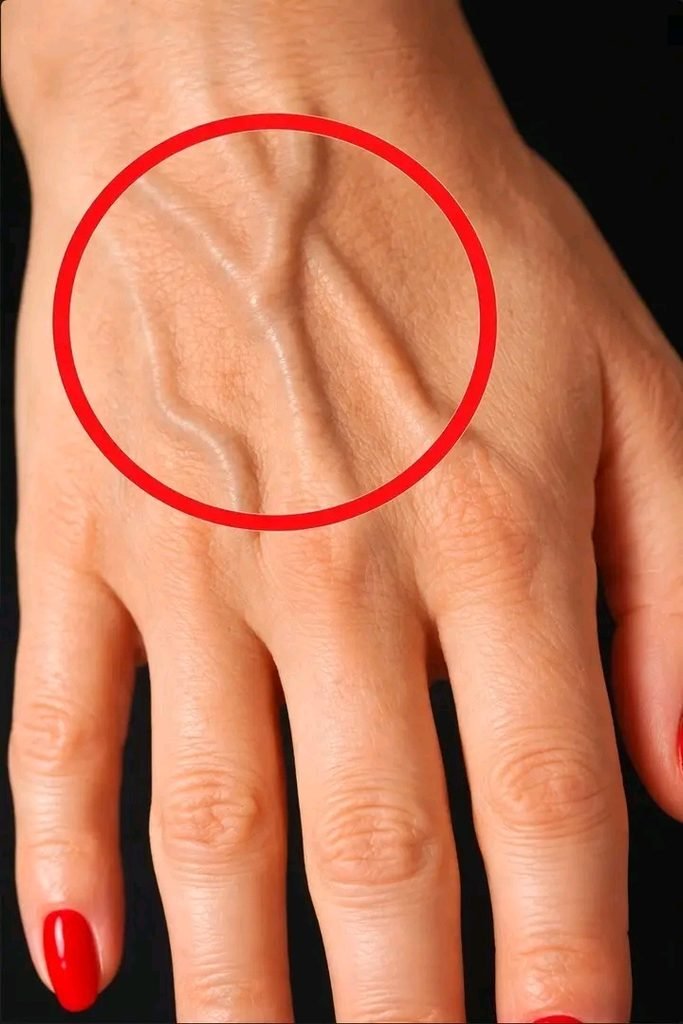
If Your Veins Are Visible, What Does It Really Mean?
Have you ever noticed that the veins on your hands, arms, or legs look more prominent than usual? You may have seen claims online suggesting that visible veins reveal a hidden health problem. However, visible veins are often completely normal and do not automatically mean that something is wrong with your health.
Veins carry blood back toward the heart. Their appearance varies from person to person, depending on skin thickness, body composition, genetics, temperature, physical activity, and age.
Understanding why veins become more noticeable can help you distinguish ordinary changes from symptoms that deserve medical attention.
1. You May Have Naturally Thin Skin
People with thinner or lighter skin may notice their veins more easily because the blood vessels beneath the skin are more visible.
Skin thickness and transparency vary naturally between individuals. If your veins have always been visible and you have no other symptoms, this is often simply a normal physical characteristic.
2. You May Have Less Fat Under the Skin
Subcutaneous fat is the layer of fat located just beneath the skin. When this layer is thinner, veins may appear more prominent.
This can occur in people with naturally lean body types, athletes, or individuals who have lost body fat.
Visible veins alone do not indicate whether your weight is healthy or unhealthy. Unintentional weight loss, however, should be discussed with a healthcare professional.
3. Exercise Can Make Veins More Noticeable
During exercise, blood flow to working muscles increases. Veins may temporarily become more prominent, particularly during strength training or other strenuous activities.
This is often a normal response to physical exertion. The veins may become less noticeable after you rest and your body temperature and circulation return to normal.
However, a newly swollen, painful, or discolored arm or leg should not be dismissed as an exercise-related change.
4. Aging Can Make Veins Stand Out
As people age, the skin gradually becomes thinner and loses some of its elasticity. The tissues beneath the skin also change, making veins on the hands and arms more visible.
This is a common part of aging and does not necessarily indicate poor circulation.
If visible veins are accompanied by persistent swelling, skin changes, or pain, a medical assessment may help identify the cause.
5. Heat Can Temporarily Increase Vein Visibility
In warm weather, blood vessels near the surface of the skin may widen to help the body release heat.
As a result, veins can look more prominent after a hot shower, during hot weather, or following exercise.
This temporary change is generally normal and should settle as your body cools.
6. Prominent Veins Can Sometimes Indicate Varicose Veins
Not all visible veins are the same. Varicose veins are enlarged, twisted veins that commonly develop in the legs when the valves inside the veins do not work effectively.
Possible signs include:
- Bulging or twisted veins
- Aching, heaviness, or discomfort in the legs
- Swelling around the ankles
- Itching around affected veins
- Symptoms that worsen after prolonged standing
Varicose veins are not the same as ordinary visible veins on the hands or arms. If they cause discomfort, swelling, or skin changes, speak with a healthcare professional.
7. When Should You Be Concerned About Visible Veins?
Visible veins by themselves are usually not an emergency. What matters is whether their appearance changes suddenly or occurs alongside other symptoms.
Seek medical attention if you notice:
- New, persistent swelling in one arm or leg
- Pain, warmth, or redness around a vein
- A hard, tender vein beneath the skin
- Skin discoloration or sores near prominent leg veins
- A sudden, unexplained change in the appearance of your veins
Seek emergency care if one-sided limb swelling or pain occurs with sudden shortness of breath, chest pain, coughing up blood, or fainting. These symptoms can indicate a serious blood clot or another emergency.
Can Visible Veins Mean Poor Circulation?
Not necessarily. Veins are responsible for returning blood to the heart, while arteries carry blood away from the heart. Simply seeing veins beneath your skin does not establish that your circulation is poor.
Circulation problems may cause other symptoms, such as leg pain during walking, wounds that heal slowly, or a limb that suddenly becomes cold, pale, painful, or numb. These symptoms deserve medical assessment.
A healthcare professional can evaluate your symptoms and determine whether any testing is necessary.
How Can You Keep Your Veins Healthy?
Although you cannot change every factor that affects vein visibility, several habits support general vascular health:
- Stay physically active with regular walking or other suitable exercise.
- Avoid sitting or standing in one position for excessively long periods.
- Maintain a healthy weight for your individual circumstances.
- Avoid smoking.
- Elevate your legs when resting if you experience swelling.
- Seek advice if you develop persistent leg discomfort or swelling.
If you have ongoing symptoms, ask a healthcare professional whether compression stockings or other treatments are appropriate for you.
Final Thoughts
Visible veins on your hands, arms, or legs are often a normal result of genetics, thin skin, lower body fat, exercise, heat, or aging. Their appearance alone is not a reliable way to diagnose a disease or determine your overall health.
Pay attention to sudden changes, pain, swelling, redness, warmth, or other unusual symptoms rather than assuming that prominent veins automatically signal a problem.
Medical disclaimer: This article is for educational purposes only and does not replace professional medical advice, diagnosis, or treatment. Seek urgent medical care if you experience symptoms that may indicate a blood clot or another serious medical condition.
Add a concise SEO meta descriptionClarify normal veins versus varicose veins