
Introduction
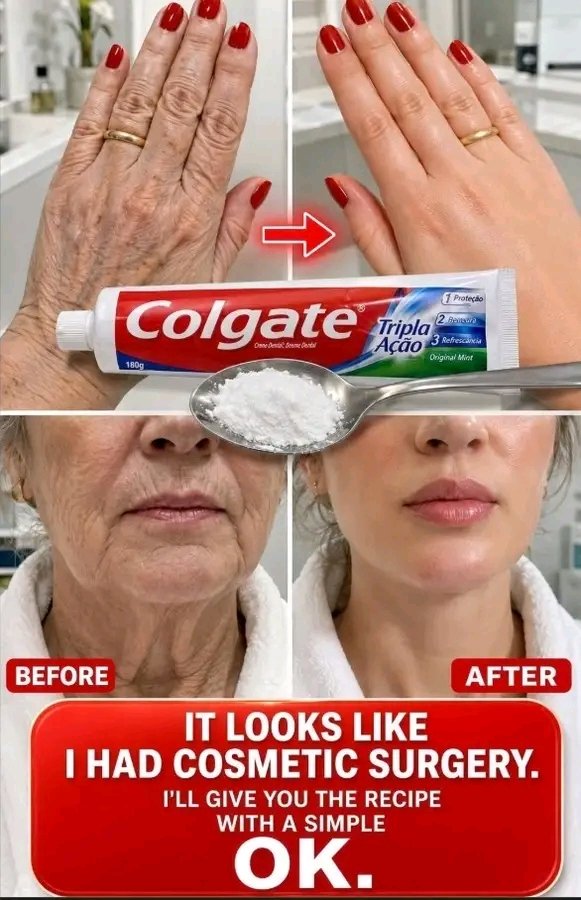
Social media is full of beauty tips promising smoother, brighter, and younger-looking skin using simple household ingredients. One viral trend claims that mixing toothpaste with a white powder can reduce wrinkles, improve the appearance of aging hands, and make facial skin look remarkably younger.
The images circulating online are certainly eye-catching, showing dramatic before-and-after transformations. But can toothpaste really deliver these results? Before trying this popular home remedy, it is important to understand what it can and cannot do, which ingredients may irritate your skin, and what dermatologists recommend for maintaining a healthy, youthful-looking complexion.
Why Is the Toothpaste Beauty Hack So Popular?
Toothpaste is an everyday household product, which makes it an appealing ingredient for people looking for inexpensive beauty solutions. Viral posts often suggest that toothpaste can tighten the skin, reduce fine lines, brighten dark spots, and improve the appearance of wrinkles on the face and hands.
Some versions of this trend recommend combining toothpaste with baking soda or other powders to create a homemade skin treatment.
However, a remedy becoming popular online does not mean it has been scientifically proven to work. Toothpaste is formulated specifically for cleaning teeth, not for treating facial skin or reversing the natural aging process.
According to dermatology guidance, toothpaste can cause redness, dryness, burning, and irritation when applied to the skin. These reactions may make the complexion look worse rather than better.
Can Toothpaste Reduce Wrinkles?
The short answer is no: there is no reliable scientific evidence that applying toothpaste to the skin reduces wrinkles or produces results comparable to cosmetic procedures.
Wrinkles develop naturally as the skin ages. Sun exposure, genetics, changes in collagen and elastin, and the gradual loss of skin moisture can all contribute to visible lines and changes in skin texture.
Toothpaste does not address these underlying causes. Although some ingredients may temporarily dry the skin, this effect should not be confused with genuine skin tightening or wrinkle reduction.
In fact, irritation can make fine lines more noticeable by damaging the skin’s protective barrier and causing dryness.
For this reason, toothpaste should not be considered an anti-aging treatment.
Why You Should Avoid Applying Toothpaste to Your Face
Although toothpaste is generally intended for oral hygiene, its ingredients may be unsuitable for delicate facial skin.
1. Skin Irritation
Certain toothpaste ingredients, including flavoring agents, detergents, and other additives, may trigger irritation. Possible symptoms include redness, itching, burning, and peeling.
People with sensitive skin may be particularly vulnerable to these reactions.
2. Excessive Dryness
Some toothpaste formulations can remove moisture from the skin or leave it feeling tight and uncomfortable. Excessive dryness may emphasize fine lines instead of making them less visible.
3. Damage to the Skin Barrier
The skin barrier helps retain moisture and protects the body from external irritants. Using products that are not designed for skin care may interfere with this protective function.
4. Dark Marks After Irritation
Inflammation can sometimes lead to post-inflammatory hyperpigmentation, particularly in people whose skin is prone to developing dark marks. This means that an attempt to improve the complexion could leave unwanted discoloration.
For these reasons, dermatologists generally recommend using products specifically formulated for the skin rather than experimenting with toothpaste-based remedies.
What About Baking Soda and Other Household Powders?
Baking soda is another ingredient frequently promoted in homemade beauty recipes. However, combining it with toothpaste does not automatically make the mixture safe or effective.
Facial skin has a protective surface environment that can be disturbed by unsuitable ingredients, excessive rubbing, or repeated applications.
Homemade mixtures may also vary in concentration, making their effects difficult to predict. There is no established toothpaste-and-baking-soda recipe proven to reverse wrinkles, tighten sagging skin, or recreate the effects of cosmetic surgery.
The safest approach is to avoid applying these mixtures to the face or hands for anti-aging purposes.
Better Ways to Achieve Smoother, Healthier-Looking Skin
You do not need an expensive beauty routine to care for your skin. A few consistent habits can make a meaningful difference in its appearance and overall condition.
1. Use Sunscreen Every Day
Sun exposure is a major contributor to premature skin aging. Applying a broad-spectrum sunscreen with SPF 30 or higher helps protect against ultraviolet radiation and may reduce the development of wrinkles and uneven pigmentation.
Apply it to exposed areas, including the face, neck, and hands, and reapply as directed, especially when spending extended periods outdoors.
2. Choose a Suitable Moisturizer
Moisturizing helps the skin retain water, making it feel softer and appear smoother. By temporarily plumping the outer layers of the skin, a moisturizer can also make some fine lines less noticeable.
Look for a product suited to your skin type and use it consistently.
3. Consider Proven Anti-Aging Ingredients
Certain ingredients in skin-care products may improve the appearance of fine lines, uneven texture, or discoloration.
Examples include:
- Retinol: May help improve fine lines and uneven skin texture, although irritation is possible.
- Vitamin C: Can help protect the skin against oxidative damage and improve the appearance of uneven skin tone.
- Hyaluronic acid: Helps attract and retain moisture, temporarily making the skin look plumper.
- Niacinamide: May support the skin barrier and help improve the appearance of uneven skin tone.
Introduce new products gradually, follow the manufacturer’s instructions, and discontinue use if significant irritation develops. If you are pregnant or planning pregnancy, consult a healthcare professional before using retinoids.
4. Take Care of Your Hands
The hands often show signs of aging because they receive frequent sun exposure and are repeatedly washed throughout the day.
To maintain softer, healthier-looking hands, apply moisturizer after washing, use sunscreen on exposed skin, and wear protective gloves when handling household cleaning products.
These simple habits are generally more beneficial than applying unproven mixtures.
5. Maintain Healthy Daily Habits
Adequate sleep, a balanced diet, sufficient hydration, and avoiding smoking can support general skin health.
Although these habits cannot stop natural aging, they can help maintain the skin’s condition and complement a sensible skin-care routine.
Can Home Remedies Replace Cosmetic Surgery?
No. A homemade mixture cannot be expected to produce the same results as a facelift or another cosmetic procedure.
Some skin-care products can improve hydration, texture, and the appearance of fine lines, but their effects are generally modest. More pronounced concerns, such as significant skin laxity or deep wrinkles, may require professional assessment to determine which treatments are appropriate.
Be cautious of online advertisements that promise dramatic transformations in a few minutes or claim that a simple household product can make someone look decades younger.
Before-and-after photographs alone do not establish that a treatment works. Differences in lighting, camera angles, makeup, image editing, and the individuals photographed can significantly influence the apparent results.
Frequently Asked Questions
Does Colgate toothpaste remove wrinkles?
No reliable clinical evidence shows that Colgate or another toothpaste brand removes wrinkles. Toothpaste should be used for oral hygiene, not as an anti-aging skin treatment.
Can toothpaste make the hands look younger?
There is no established evidence that toothpaste reverses wrinkles or age-related changes on the hands. Regular moisturizing and sun protection are safer approaches.
Is toothpaste mixed with baking soda safe for facial skin?
This mixture is not a proven anti-aging treatment and may cause dryness, irritation, or inflammation. It is best avoided on the face.
What is the simplest way to make skin look smoother?
A gentle cleanser, a suitable moisturizer, and daily broad-spectrum sunscreen provide a practical foundation for skin care. Additional treatments can be selected according to individual needs and skin sensitivity.
How long does it take to see results from anti-aging skin care?
Results depend on the product and the concern being treated. Moisturizers may improve the appearance of dryness quickly, while products intended to improve fine lines or uneven pigmentation may require several weeks or longer.
Final Thoughts
The viral toothpaste beauty hack may appear convincing, but dramatic before-and-after images should not be mistaken for scientific evidence. Toothpaste has not been proven to erase wrinkles, tighten sagging skin, or deliver the effects of cosmetic surgery.
Instead of risking irritation with untested household mixtures, focus on proven skin-care habits: daily sun protection, regular moisturizing, gentle cleansing, and carefully selected products.
Healthy-looking skin is best supported by consistent care and realistic expectations, not by miracle remedies promoted online.
Disclaimer: This article is for informational purposes only and does not replace professional medical advice. If you experience persistent skin irritation or have concerns about wrinkles, pigmentation, or skin sensitivity, consult a qualified dermatologist.