
Discover What Your Sleep Position Reveals About Your True Personality
Have you ever wondered whether the way you sleep says something about who you are? Some people curl up on their sides, others stretch out across the bed, and some prefer sleeping on their backs with their arms by their sides.
Popular theories suggest that these sleeping positions reflect personality traits, emotional needs, and even how people handle relationships. But is there real science behind these claims?
The answer is more complicated than you might think. Your sleeping position can be an interesting topic for self-reflection, but it cannot reliably reveal your personality. Researchers have found some relationships between sleep and personality, but evidence linking specific body positions to particular character traits remains limited. Sleep Foundation
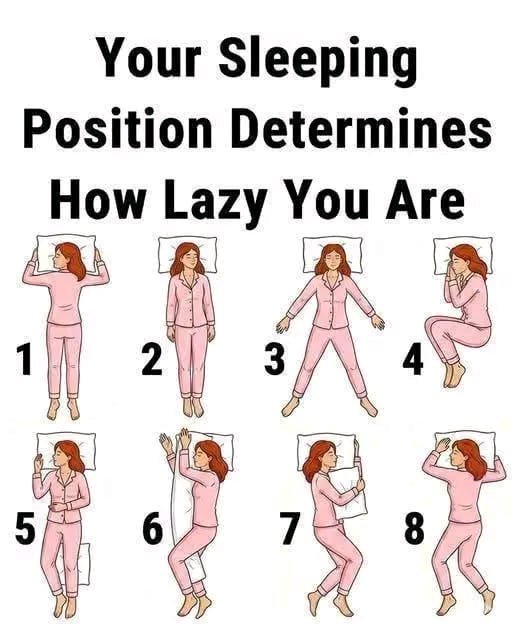
Let’s explore six common sleeping positions and what popular interpretations say about them.
1. The Fetal Position: Curled Up on Your Side
<text> </text>
The fetal position involves sleeping on your side with your knees bent toward your chest, similar to the position of a baby in the womb.
Popular interpretations associate this position with sensitivity, thoughtfulness, and a desire for comfort or security.
People who find this position comfortable may simply enjoy feeling physically supported while sleeping. Others may adopt it because it relieves discomfort in their back or hips.
What it really means: Sleeping in a curled-up position does not prove that someone is shy, sensitive, or emotionally guarded. Comfort, habit, and physical needs are more practical explanations.
2. The Log Position: Sleeping Straight on Your Side
<text> </text>
In the log position, a person lies on their side with their legs relatively straight and their arms close to their body.
Some popular sleep-position theories associate this posture with an easygoing, sociable, or trusting personality.
However, the position itself cannot tell you whether someone is outgoing or reserved. People may sleep this way because it feels natural or because side sleeping suits their body.
A useful takeaway: If you prefer this position, pay attention to whether it helps you wake up feeling rested rather than trying to draw conclusions about your character.
3. The Yearner Position: Arms Extended Forward
<text> </text>
The yearner position involves sleeping on your side with both arms stretched out in front of you.
Popular interpretations sometimes describe yearners as curious, open-minded, or thoughtful people who take their time making decisions.
These descriptions may sound familiar, but there is insufficient scientific evidence to use arm placement during sleep to determine someone’s decision-making style.
Your arms may simply rest this way because it feels comfortable or reduces pressure on another part of your body.
4. The Soldier Position: Flat on Your Back
<text> </text>
Soldier sleepers lie on their backs with their legs extended and their arms resting close to their sides.
Some traditional interpretations connect this posture with discipline, reserve, and a preference for structure.
But a sleeping position cannot establish whether a person is organized, serious, confident, or emotionally reserved.
From a practical perspective, sleeping on your back may feel comfortable for some people. However, it can worsen snoring or obstructive sleep apnea in others.
If you frequently snore loudly, wake up gasping, or feel excessively sleepy during the day, discuss these symptoms with a healthcare professional.
5. The Starfish Position: Arms and Legs Spread Out
<text> </text>
Starfish sleepers lie on their backs with their arms raised or spread out and their legs extended.
Popular descriptions sometimes portray these sleepers as generous, supportive, or comfortable giving others attention.
There is no reliable evidence that spreading your arms and legs during sleep means you are more caring or helpful than someone who sleeps in another position.
This posture may simply feel spacious and relaxing. It can also take up more room in a shared bed, so comfort for both partners matters.
6. The Freefall Position: Sleeping on Your Stomach
<text> </text>
The freefall position involves lying on your stomach, often with your head turned to one side and your arms around or beneath the pillow.
Some popular theories describe stomach sleepers as bold, playful, or outwardly confident while suggesting they may prefer greater control in certain situations.
These descriptions are not established psychological facts. Your preferred position does not reveal hidden insecurities or predict how you behave in relationships.
From a physical perspective, stomach sleeping can place additional strain on the neck because the head must remain turned to one side. If you wake up with neck or back pain, experimenting with another position may help.
Can Your Sleeping Position Really Reveal Your Personality?
Scientific evidence does not support using a sleeping position as a personality test.
Research has explored relationships between personality traits and sleep quality, but that is different from proving that a particular body posture reveals someone’s character. A systematic review published in 2024 examined 18 studies and found associations between certain personality traits and aspects of sleep, while research specifically connecting sleeping positions with personality remains limited. Research review
Your sleep posture can be influenced by many factors, including:
- Physical comfort and habitual movement.
- Back, neck, or shoulder discomfort.
- Pregnancy or other health considerations.
- Snoring and breathing difficulties.
- Mattress and pillow support.
- Personal preference and sleeping environment.
Many people also change positions throughout the night, so the position in which you fall asleep may not be the one you maintain.
What Matters More Than Your Sleeping Position?
Instead of trying to decode your personality from your posture, focus on the factors that genuinely support healthy sleep.
Maintain a consistent sleep schedule. Going to bed and waking up at similar times can help regulate your sleep routine.
Choose a comfortable sleeping position. Your posture should allow you to rest without unnecessary pressure or pain.
Pay attention to sleep quality. Frequent awakenings, persistent insomnia, loud snoring, or daytime exhaustion may deserve professional attention.
Create a relaxing bedtime routine. Reducing bright light, limiting late caffeine, and allowing time to unwind may improve sleep for some people.
Final Thoughts
Whether you sleep curled up like a ball, stretched out like a starfish, or flat on your back, your favorite position may be an interesting part of your nightly routine.
Although popular theories attach personality traits to different sleeping styles, these descriptions should be treated as entertainment rather than scientific conclusions.
Your personality is shaped by many aspects of your life, experiences, values, and behavior—not simply by the position in which you fall asleep.
So, what is your favorite sleeping position: fetal, log, yearner, soldier, starfish, or freefall? Share your answer and see which description sounds most familiar to you, while remembering that no sleeping position can define who you truly are.