
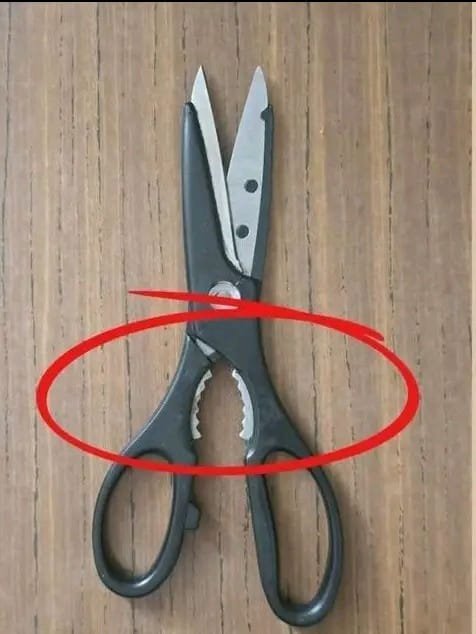
What Is That Weird Toothed Part on Kitchen Scissors For? It’s a Hidden Kitchen Tool!
Have you ever looked closely at your kitchen scissors and wondered why they have a strange, toothed section between the handles? At first glance, it might seem like an unusual design feature or simply a decorative detail. But that little section can actually serve a very practical purpose!
Many kitchen scissors are designed to do much more than cut paper, herbs, or food packaging. Depending on the model, they may include a built-in gripping tool that helps you tackle everyday kitchen tasks without reaching for another utensil.
The Secret Purpose of the Toothed Section
On many kitchen scissors, the ridged area between the handles is designed to function as a gripper for twisting, holding, or cracking certain objects.
When the handles are brought together, the opposing toothed surfaces can grip an object securely. This makes the feature useful for tasks that would otherwise require extra effort.
Here are some common uses.
1. Opening Stubborn Jar Lids
Some kitchen scissors have a gripping section that can help you hold and twist small lids. The teeth provide extra friction, helping reduce slipping.
However, this feature is not suitable for every jar or lid. A dedicated jar opener may provide a more secure grip for larger containers.
2. Cracking Nuts
On certain models, the toothed section can help crack nuts with hard shells. The ridges help hold the nut in place while pressure is applied.
Always check the manufacturer’s instructions before using this feature, as not all kitchen scissors are designed for cracking nuts.
3. Gripping Small Objects
The ridged surfaces can also help hold slippery or small objects more firmly than smooth metal surfaces would.
Depending on the design, this may include bottle caps or other small kitchen items.
4. Opening Bottles or Packages
Some multifunctional kitchen scissors include additional features such as a bottle opener or a serrated gripping area. These features can make everyday kitchen tasks easier.
Remember, though, that a toothed grip is not necessarily a bottle opener. Its intended use depends on the exact design.
Why Do Manufacturers Add This Feature?
The main idea is convenience. Combining several functions into one utensil saves drawer space and means you may not need to search for a separate tool every time you cook.
For home cooks, even a small design detail can make food preparation more efficient.
How to Use It Safely
Before using the toothed section, keep these safety tips in mind:
- Check the product instructions to confirm its intended purpose.
- Keep your fingers away from the blades and gripping teeth.
- Avoid applying excessive force, which could damage the scissors or cause an object to slip.
- Do not use the gripping section on glass containers that could break under pressure.
- Wash and dry kitchen scissors thoroughly after food preparation, especially if they come into contact with raw meat.
Do All Kitchen Scissors Have This Feature?
No. Some kitchen scissors have a toothed gripping section, while others include different attachments or no multifunctional feature at all.
The shape, spacing, and position of the teeth can help indicate their purpose, but the manufacturer’s instructions are the best way to identify the intended use.
Final Thoughts
That unusual toothed section on your kitchen scissors may be more useful than it looks! On many models, it acts as a built-in gripper for tasks such as holding small objects or helping open certain lids.
The next time you reach for your kitchen scissors, take a closer look. You might discover that your everyday kitchen tool has an extra function you never knew about!
Kitchen tip: If you share a photo of your scissors, you can identify the exact purpose of the toothed section more confidently, since different designs are made for different tasks.
Clarify the Exact Scissor FeatureReduce Repetitive Safety Caveats