
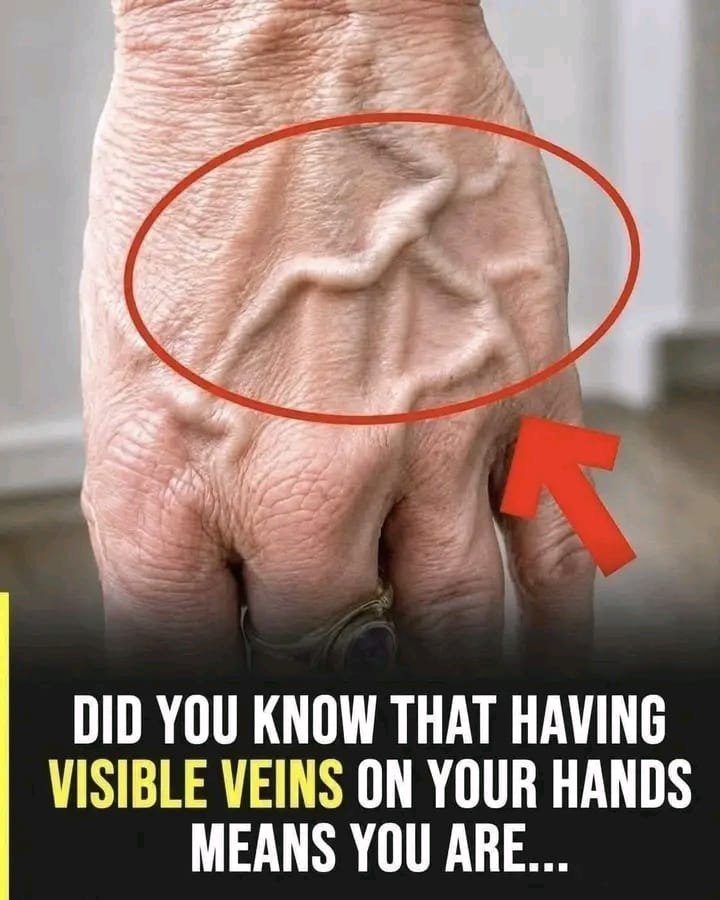
Did You Know That Having Visible Veins Could Mean Something About Your Health?
Have you ever noticed blue or green veins showing clearly through your hands, arms, legs, or chest? You may have wondered whether this is a sign of good circulation, low body fat, aging, or an underlying health problem.
The truth is that visible veins are often completely normal, but their appearance can sometimes provide clues about your body’s changes. Understanding the difference between ordinary visible veins and symptoms that need medical attention can help you protect your health.
1. You May Have Naturally Thin or Light-Transmitting Skin
One of the most common reasons veins are visible is that the skin covering them is relatively thin.
Superficial veins lie close to the skin’s surface, making them easier to see. Skin thickness, pigmentation, genetics, and age can all influence how prominent your veins appear.
Visible veins alone do not mean that you have poor circulation or a serious medical condition.
2. You May Have Less Body Fat Under Your Skin
People with lower levels of subcutaneous fat may notice more prominent veins, particularly on their hands, forearms, and legs.
This can also happen in people who exercise regularly or have developed larger muscles. Exercise temporarily increases blood flow, which may make veins appear more noticeable.
However, visible veins are not a reliable measure of fitness or overall health.
3. Aging Can Make Veins More Noticeable
As people age, their skin may become thinner and lose some elasticity. This can make veins that were previously less noticeable appear more prominent.
Changes in the skin and connective tissue are a normal part of aging. Nevertheless, a sudden change in the appearance of your veins should not automatically be attributed to age.
4. Bulging Veins Could Be Varicose Veins
Not all visible veins are the same.
Varicose veins are enlarged, twisted veins that commonly develop in the legs. They occur when the valves inside veins do not function properly, allowing blood to pool and increase pressure in the vessel.
Possible symptoms include:
- Bulging, blue or purple veins.
- Aching or throbbing legs.
- A feeling of heaviness, especially after standing.
- Itching around the affected veins.
- Swelling around the ankles or feet.
Varicose veins are common, but painful or worsening symptoms deserve medical assessment. Cleveland Clinic: Varicose Veins.
5. Visible Veins Do Not Automatically Mean Good Circulation
It is a common misconception that prominent veins prove your blood is circulating perfectly.
Veins may be visible for many harmless reasons, but some vein conditions involve blood pooling or problems with the valves that help blood return to the heart.
Pay attention to other symptoms rather than judging your circulation by appearance alone. Persistent swelling, pain, skin discoloration, or sores near the ankles are reasons to seek medical advice.
6. When Should You Be Concerned?
Most visible veins do not require emergency treatment. However, certain changes should never be ignored.
Contact a healthcare professional promptly if a vein becomes newly swollen, painful, red, warm, or unusually hard, especially if the surrounding area also swells.
Seek emergency medical care if you develop sudden shortness of breath, chest pain, fainting, or coughing up blood, as these may indicate a serious blood clot complication.
Do not massage a painful, swollen area in an attempt to treat a possible clot. NHS: Phlebitis.
7. What Can You Do to Support Healthy Veins?
Although you cannot always prevent visible veins, several habits may support healthy circulation:
- Move regularly: Walking and other physical activities help activate the muscles that assist blood flow.
- Avoid sitting or standing still for long periods: Take movement breaks when possible.
- Elevate your legs: This may help relieve swelling associated with certain vein problems.
- Maintain a healthy weight: This can reduce pressure on leg veins.
- Seek medical advice about persistent symptoms: A healthcare professional can determine whether examination or an ultrasound is needed.
Compression stockings may help some people with vein-related symptoms, but it is best to get professional advice about the appropriate type and fit.
Final Thoughts
Having visible veins does not automatically mean that something is wrong with your health. Thin skin, genetics, aging, exercise, and lower levels of body fat can all make veins easier to see.
The most important distinction is between veins that have always been visible and veins that suddenly change or develop symptoms.
Know what is normal for your body, pay attention to new changes, and seek medical advice when pain, swelling, redness, or warmth appears.
Medical Disclaimer
This article is for educational purposes only and does not replace professional medical advice or diagnosis.
Sources
Make the headline more specificAdd a brief opening takeaway