
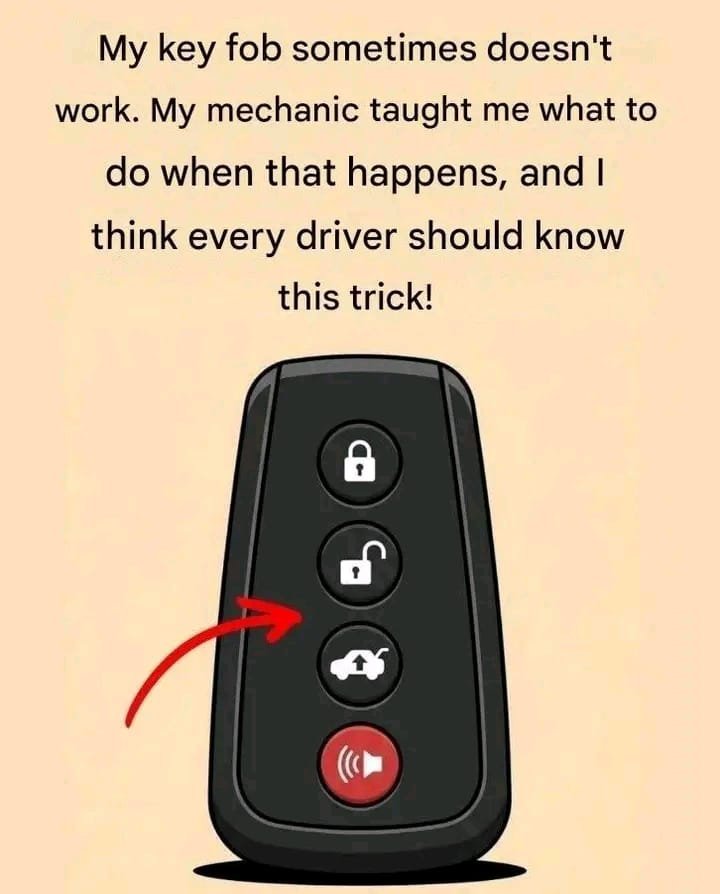
Try These Simple Hacks When Your Car Key Fob Stops Working
Have you ever pressed your car key fob and nothing happened? You press the unlock button again, move closer to the vehicle, and try one more time—but your car still refuses to respond.
Before assuming your key fob is broken or rushing to buy a replacement, there are several simple things you can try at home. In many cases, the problem is caused by a weak battery, signal interference, or a minor issue that can be resolved without an expensive repair.
Here are some practical troubleshooting tips to help you get your key fob working again.
1. Replace the Key Fob Battery
A weak or dead battery is one of the most common reasons a key fob stops working.
Most key fobs use a small coin-cell battery, such as a CR2032 or CR2025, although the correct type depends on your vehicle and key model.
What to do:
- Check your vehicle’s owner’s manual for the correct battery.
- Carefully open the key fob according to the manufacturer’s instructions.
- Replace the old battery, paying attention to the positive and negative sides.
- Reassemble the fob and test it near your vehicle.
Avoid forcing the casing open, as the plastic clips and internal components can break.
2. Move Closer to Your Vehicle
If your key fob works intermittently, you may be outside its effective operating range.
Move closer to the vehicle and try pressing the unlock button again. Nearby electronic devices, metal objects, and radio-frequency interference can sometimes affect the signal.
If the fob works only when you are very close to the car, its battery may be weak or the vehicle’s receiver may need inspection.
3. Try the Spare Key Fob
If you have a spare key, test it to help identify the problem.
- If the spare works normally, the original fob may have a weak battery or damaged electronics.
- If neither fob works, the issue may involve the vehicle’s battery, receiver, or locking system.
This simple test can help you decide whether the key or the car needs attention.
4. Use the Hidden Mechanical Key
Many modern key fobs contain a small emergency metal key.
If the remote buttons stop working, look for a release switch or latch that allows you to remove the mechanical key. Your owner’s manual can show you how to access it and unlock the driver’s door.
Some vehicles conceal the door lock beneath a small cover on the handle.
Keep in mind that opening the door manually may trigger the alarm on certain vehicles.
5. Try the Emergency Starting Method
If your car has a push-button start system and the fob battery is weak, the vehicle may still recognize the key through a backup detection system.
Depending on the make and model, you may need to hold the fob against a designated spot near the start button or place it in a specific backup slot.
Important: The location and procedure vary by vehicle. Check your owner’s manual rather than assuming the same method works for every car.
6. Check Your Car’s Battery
Sometimes the key fob is working perfectly, but the vehicle’s 12-volt battery is discharged.
Signs may include dim dashboard lights, no response from the central locking system, or difficulty starting the engine.
If other electrical systems are also failing, have the vehicle battery checked. Follow the manufacturer’s safety instructions if a jump-start is needed.
7. Look for Damage or Moisture
Has your key fob been dropped, crushed, or exposed to water?
Physical damage or moisture can interfere with its electronic circuit board. If the fob gets wet, stop pressing its buttons, remove the battery if this can be done safely, and seek appropriate repair advice. Do not apply heat from a hair dryer or place the fob in an oven.
A damaged fob may need professional repair or replacement.
8. Check Whether Reprogramming Is Necessary
Some key fobs may lose synchronization or require programming after certain repairs or battery-related events. However, replacing a normal fob battery does not automatically mean reprogramming is necessary.
Consult the vehicle’s manual for model-specific instructions. If the fob remains unresponsive after basic troubleshooting, a qualified automotive locksmith or dealership can diagnose the problem.
When Should You Call a Professional?
Seek professional help if:
- A new, correctly installed battery does not solve the problem.
- The fob has visible damage or water exposure.
- Both the primary and spare fobs fail.
- The vehicle does not recognize a properly functioning key.
- You suspect a problem with the receiver, immobilizer, or electrical system.
Final Thoughts
A car key fob that suddenly stops working can be frustrating, but it does not always mean you need a new key.
Start by checking the battery, moving closer to the vehicle, testing a spare fob, and looking for your car’s emergency entry and starting procedures. These simple checks can help you identify the cause and avoid unnecessary expenses.
Remember: The correct solution depends on your vehicle’s make, model, and year. Always follow the manufacturer’s instructions, and never force the key fob or attempt to bypass the vehicle’s security system.
Add a quick troubleshooting checklistClarify the safest troubleshooting order