
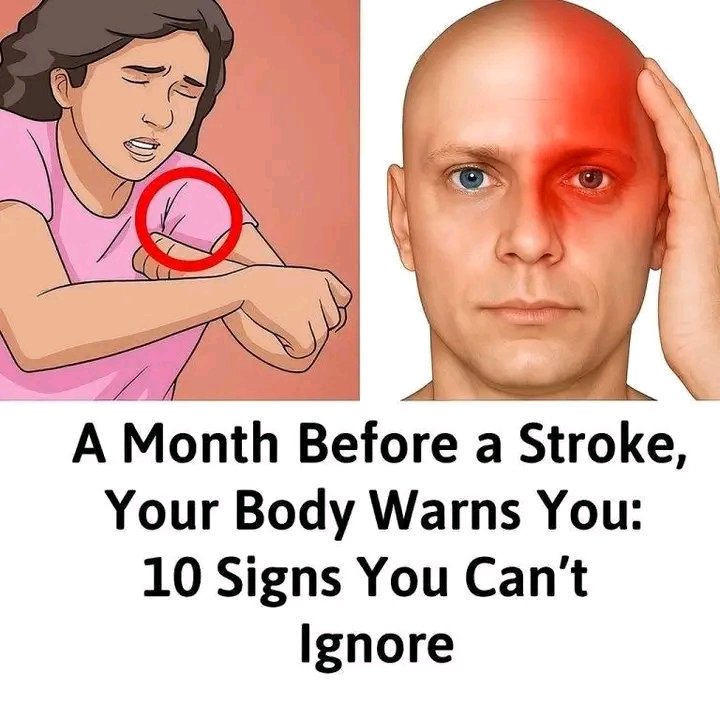
A Month Before a Stroke, Your Body May Show Warning Signs: 10 Symptoms You Should Never Ignore
A stroke can happen suddenly, but some people experience warning symptoms before a serious event. Recognizing these symptoms and understanding when to seek medical care can make a lifesaving difference.
However, there is an important distinction: there is no reliable set of 10 symptoms that predicts a stroke one month in advance. Some people experience a transient ischemic attack (TIA), sometimes called a mini-stroke, hours, days, or occasionally longer before a stroke. Others have no warning symptoms at all.
A TIA is a medical emergency, even when symptoms disappear within minutes. Knowing the warning signs is far more useful than trying to predict exactly when a stroke might occur.
10 Possible Warning Signs You Should Know
1. Sudden Weakness or Numbness on One Side
Sudden weakness, numbness, or loss of control affecting the face, arm, or leg—especially on one side of the body—is a major stroke warning sign.
A person may struggle to lift one arm, grip an object, or walk normally.
What to do: Call emergency services immediately. Do not wait to see whether the weakness improves.
2. A Drooping Face
One side of the face may suddenly droop or feel numb. When the person smiles, the smile may look uneven.
Ask the person to smile if you suspect a stroke, but do not delay getting emergency help.
3. Difficulty Speaking or Understanding Words
A stroke can affect the parts of the brain responsible for language. Someone may suddenly slur their speech, struggle to find words, speak incoherently, or have difficulty understanding simple instructions.
Sudden speech changes require emergency assessment, even if they resolve quickly.
4. Sudden Loss or Change in Vision
A person may suddenly lose vision in one eye, experience blurred or double vision, or have difficulty seeing part of their surroundings.
Although many eye conditions can cause visual symptoms, a sudden unexplained change may indicate a stroke or another urgent medical problem.
5. Sudden Dizziness or Loss of Balance
A stroke, particularly one affecting the back of the brain, may cause sudden dizziness, severe imbalance, or difficulty walking.
Dizziness alone is common and does not necessarily indicate a stroke. However, sudden dizziness accompanied by difficulty walking, double vision, weakness, or speech problems requires emergency care.
6. A Sudden, Severe Headache
A sudden, extremely severe headache—especially one that reaches its peak within seconds or minutes—can indicate bleeding in or around the brain.
Not every stroke causes a headache, and most headaches are not strokes. Nevertheless, a sudden, unusually severe headache should be treated as an emergency.
7. Brief Episodes of Stroke-Like Symptoms
Some people experience temporary weakness, numbness, speech difficulties, or visual disturbances that disappear after a short time.
These symptoms may represent a transient ischemic attack (TIA). Even if the person feels completely normal afterward, the episode can signal an increased risk of a future stroke.
Never dismiss symptoms simply because they went away. Seek emergency medical assessment.
8. Sudden Confusion
A person may suddenly become confused, have difficulty understanding speech, or struggle to communicate clearly.
Confusion has many possible causes, but sudden confusion accompanied by neurological symptoms may indicate a stroke or another serious emergency.
9. Sudden Difficulty Swallowing
A stroke can affect the muscles and coordination needed for swallowing. Someone may suddenly cough when trying to swallow, have trouble handling saliva, or be unable to swallow normally.
Sudden swallowing difficulties, particularly when combined with facial weakness, speech changes, or dizziness, need urgent evaluation. Do not give food, drink, or oral medication to someone who may be having a stroke.
10. Sudden Trouble Coordinating Movements
A person may suddenly become clumsy, struggle to use one hand accurately, veer while walking, or have difficulty coordinating their movements.
These changes can have several causes, but sudden loss of coordination—especially with other neurological symptoms—can be a sign of stroke.
Remember the FAST Stroke Warning Test
<box gap={3}> <row align=”start” gap={3}> <box background=”surface-secondary” radius=”lg” size=”56px” align=”center” justify=”center”> <icon name=”smile” size=”2xl” /> </box> <box flex=”1″ gap={1}> **F — Face**
  Ask the person to smile. Does one side droop?
</box>
</row> <divider color=”subtle” /> <row align=”start” gap={3}> <box background=”surface-secondary” radius=”lg” size=”56px” align=”center” justify=”center”> <icon name=”hand” size=”2xl” /> </box> <box flex=”1″ gap={1}> **A — Arms**
  Ask them to raise both arms. Does one drift downward?
</box>
</row> <divider color=”subtle” /> <row align=”start” gap={3}> <box background=”surface-secondary” radius=”lg” size=”56px” align=”center” justify=”center”> <icon name=”message-circle” size=”2xl” /> </box> <box flex=”1″ gap={1}> **S — Speech**
  Ask them to repeat a simple sentence. Is their speech slurred or unusual?
</box>
</row> <divider color=”subtle” /> <row align=”start” gap={3}> <box background=”surface-secondary” radius=”lg” size=”56px” align=”center” justify=”center”> <icon name=”clock” size=”2xl” /> </box> <box flex=”1″ gap={1}> **T — Time**
  If any sign appears suddenly, call emergency services immediately. Every minute matters.
</box>
</row> </box>
You do not need to observe all three symptoms before seeking help. A single sudden stroke warning sign is enough to act.
What Should You Do if Stroke Symptoms Appear?
- Call emergency services immediately. Tell the dispatcher that you suspect a stroke.
- Record when symptoms began or when the person was last known to be well.
- Do not drive the person yourself if an ambulance is available.
- Do not give aspirin unless a healthcare professional specifically instructs you to do so. Some strokes involve bleeding, and aspirin can make that worse.
- Do not wait for symptoms to disappear. Temporary symptoms can still represent a TIA.
- Do not give food, drinks, or oral medication to someone who may be having a stroke because swallowing may be impaired.
Prompt treatment can reduce brain injury and improve the chances of recovery.
Who Has a Higher Risk of Stroke?
Certain conditions and lifestyle factors increase stroke risk, including:
- High blood pressure.
- Diabetes.
- High cholesterol.
- Smoking.
- Atrial fibrillation and some other heart conditions.
- Previous stroke or TIA.
- Physical inactivity.
- Excessive alcohol consumption.
- Increasing age and certain family or medical risk factors.
Having one or more risk factors does not mean a stroke is inevitable. However, managing these factors can substantially improve cardiovascular health.
How Can You Reduce Your Risk?
Keep Blood Pressure Under Control
High blood pressure is one of the most important modifiable stroke risk factors. Have your blood pressure checked regularly and follow your treatment plan if you have hypertension.
Manage Diabetes and Cholesterol
Regular checkups, appropriate medication when prescribed, and sustainable lifestyle changes can help reduce vascular risk.
Stay Physically Active
Choose activities that suit your ability, such as walking, cycling, or swimming. Regular physical activity supports heart and blood vessel health.
Eat a Balanced Diet
Include vegetables, fruit, whole grains, beans, nuts, and other nutritious foods. Limit excess salt, highly processed foods, and sugary drinks.
Avoid Smoking
Smoking damages blood vessels and increases the risk of stroke. Quitting can improve cardiovascular health.
Take Prescribed Medication as Directed
If you have high blood pressure, atrial fibrillation, diabetes, or another relevant condition, follow your healthcare professional’s advice. Do not stop or change medication without medical guidance.
Final Thoughts
A stroke does not always provide a warning a month in advance. Some people experience a TIA or other temporary neurological symptoms before a stroke, while others develop symptoms without any prior warning.
The most important signs to recognize are sudden facial drooping, weakness on one side, speech difficulties, vision changes, severe imbalance, or an unusually severe headache.
If you suspect a stroke, call emergency services immediately—even if the symptoms disappear. Do not wait for tomorrow, next week, or a doctor’s appointment.
Medical disclaimer: This article is for educational purposes only and does not replace professional medical advice, diagnosis, or treatment.
Replace the misleading month-ahead framingAdd a prominent emergency warning box