
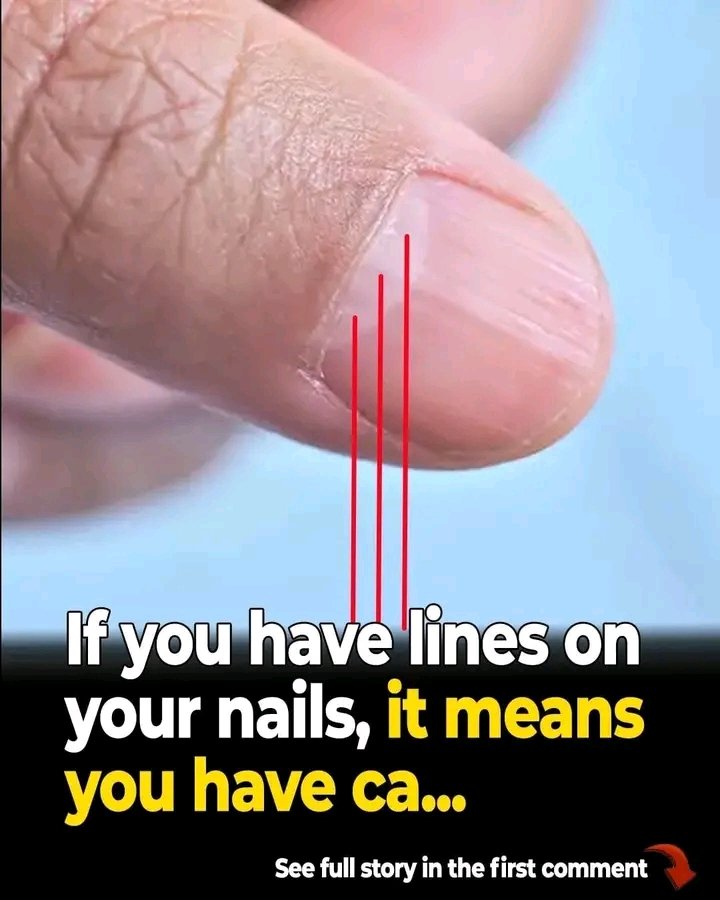
Doctor Uncovers a Telltale Sign in Your Fingernails That May Reveal Clues About Your Health and Longevity
Can your fingernails reveal something important about your health? Although nails cannot predict exactly how long you will live, changes in their color, shape, and texture may sometimes provide clues about your overall well-being.
Doctors occasionally examine fingernails as part of a general health assessment because certain nail changes can be associated with nutritional deficiencies, circulation problems, or underlying medical conditions. Understanding these signs can help you recognize when it may be time to seek medical advice.
1. What Your Fingernails May Reveal About Your Health
Healthy fingernails are generally smooth, consistent in color, and free from unexplained changes. However, normal variations are common, and nail appearance differs from person to person.
Some changes deserve closer attention, particularly when they appear suddenly or affect several nails.
Pale or Unusually White Nails
Nails that appear unusually pale may sometimes be associated with anemia or other health conditions. However, lighting, skin tone, and normal variations can also influence how nails look.
If pale nails occur alongside persistent fatigue, dizziness, shortness of breath, or unusual weakness, consult a healthcare professional for an appropriate assessment.
Spoon-Shaped Fingernails
Nails that curve upward at the edges, creating a spoon-like appearance, are known as koilonychia. This change can sometimes be associated with iron deficiency.
A medical professional can determine whether testing is needed and recommend appropriate treatment if a deficiency is confirmed.
Clubbing of the Fingertips
Clubbing occurs when the fingertips become enlarged and the nails curve more noticeably around them. It can sometimes be associated with lung, heart, or other systemic diseases.
Newly developed clubbing should be medically evaluated, especially if accompanied by breathing difficulties or other unexplained symptoms.
Brittle or Splitting Nails
Nails that break or peel easily are often affected by repeated exposure to water, cleaning products, nail polish removers, or physical damage.
In some cases, persistent nail fragility may occur alongside nutritional deficiencies or thyroid disorders. Brittle nails alone, however, are not a reliable way to identify a particular disease.
2. Can a Nail Sign Predict Your Life Expectancy?
You may encounter claims online suggesting that a particular nail feature can reveal how long someone will live. There is no scientifically established fingernail sign that can accurately predict an individual’s life expectancy.
Researchers study many factors associated with longevity, including cardiovascular health, smoking, physical activity, nutrition, genetics, and access to healthcare.
Certain nail abnormalities may help clinicians recognize conditions that deserve further investigation. This does not mean that nail appearance alone can determine a person’s future health or lifespan.
The important distinction is that a nail change may sometimes be a clue to an underlying condition, rather than a direct prediction of longevity.
3. The Importance of the Half-Moon at the Base of Your Nails
The pale, crescent-shaped area at the base of some fingernails is called the lunula. It is a normal part of nail anatomy.
Its size and visibility vary naturally between individuals and across different fingers. Having small or less visible lunulae does not, by itself, mean that someone has poor health or a shorter life expectancy.
Rather than judging health by the appearance of this area, pay attention to significant changes and discuss persistent concerns with a healthcare professional.
4. Dark Lines and Changes in Nail Color
Dark streaks can occur for several reasons, including minor injuries, pigmentation, and certain medical conditions.
However, a new dark streak on a nail, especially one that widens, changes over time, or extends onto the surrounding skin, should be assessed promptly by a medical professional. In some cases, it can be a sign of a serious condition such as nail melanoma.
Do not ignore unexplained nail changes simply because they are painless.
5. How to Support Healthy Nails and Overall Well-Being
Although no nail feature can guarantee a long life, healthy daily habits can support your general health.
- Eat a balanced diet: Include vegetables, fruits, whole grains, protein sources, and healthy fats.
- Stay physically active: Regular activity supports cardiovascular health and overall fitness.
- Avoid smoking: Smoking increases the risk of several serious diseases.
- Protect your nails: Wear gloves when working with cleaning products and moisturize your hands regularly.
- Attend recommended health screenings: Blood pressure checks and other appropriate preventive assessments can help identify health problems early.
- Seek medical advice when needed: Persistent or unexplained nail changes deserve attention, particularly when accompanied by other symptoms.
6. When Should You See a Doctor?
Consider making an appointment if you notice persistent changes in nail shape, unusual discoloration, unexplained thickening, or nails that become detached from the nail bed.
Seek prompt medical evaluation for a new or changing dark nail streak. If nail changes occur alongside chest pain, severe breathing difficulties, or other emergency symptoms, seek urgent medical care.
A clinician can assess your symptoms, medical history, and any other relevant findings to determine whether further testing is necessary.
Frequently Asked Questions
Can fingernails reveal how long I will live?
No. Fingernails cannot reliably predict an individual’s lifespan. Certain changes may provide clues about health conditions, but they cannot establish how long someone will live.
Do visible half-moons mean I am healthy?
Not necessarily. The size and visibility of the lunula vary naturally, and their appearance alone is not a dependable measure of health.
What is the most concerning nail change?
A new or changing dark streak, particularly one that widens or spreads onto the surrounding skin, deserves prompt medical assessment. Other changes may also warrant evaluation depending on the symptoms.
Can healthy nails indicate good nutrition?
Healthy-looking nails can be consistent with normal nail growth, but appearance alone cannot confirm that your body receives every nutrient it needs.
Final Thoughts
Your fingernails may offer useful clues about your health, but they are not a crystal ball for predicting longevity. Changes in color, shape, or texture can sometimes point toward conditions that benefit from early diagnosis and treatment.
The best approach is to notice significant changes without jumping to conclusions, maintain healthy habits, and consult a healthcare professional when something seems unusual.
Have you ever noticed a change in your fingernails that made you curious about your health? Share your experience in the comments below.