
Full recipe 👇👇
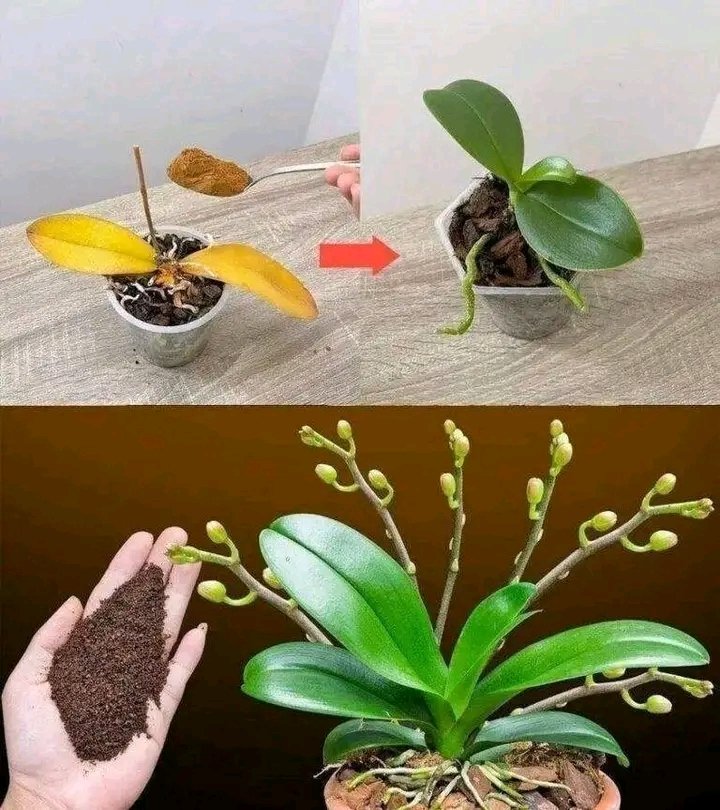
Just One Teaspoon? How to Encourage Your Orchid to Bloom With More Flowers
Orchids are among the most beautiful houseplants, but getting them to produce new flower spikes can sometimes be challenging. You may have seen claims that a single teaspoon of a homemade ingredient can make an orchid suddenly burst into bloom. While no kitchen ingredient can guarantee instant flowers, the right care routine—and a suitable orchid fertilizer—can help encourage healthy growth and flowering.
Here is a simple, practical guide to caring for your orchid and helping it produce beautiful blooms.
Why Your Orchid May Not Be Flowering
Before trying a homemade remedy, check the most common reasons orchids fail to bloom:
- Insufficient light: Many common orchids, especially Phalaenopsis, need bright, indirect light.
- Incorrect watering: Both underwatering and excessive watering can stress the roots.
- Lack of nutrients: Orchids growing in bark-based potting mixes may benefit from regular, diluted orchid fertilizer.
- Unsuitable temperatures: Some orchids need a modest difference between daytime and nighttime temperatures to encourage flowering.
- Poor root health: Damaged or rotting roots can prevent healthy growth.
Ingredients and Supplies
For a safe orchid-feeding routine, you will need:
- A balanced, water-soluble fertilizer specifically formulated for orchids
- Clean, room-temperature water
- A measuring spoon or measuring syringe
- A pot with drainage holes
Important: There is no scientifically established one-teaspoon homemade recipe that reliably makes orchids bloom immediately. The correct fertilizer amount depends on the product’s concentration, so always follow its label rather than applying an arbitrary teaspoon.
Step-by-Step: How to Encourage Orchid Flowering
Step 1: Check the Roots
Healthy orchid roots are generally firm. For many Phalaenopsis orchids, roots may appear green when wet and silvery when dry. Remove standing water from the outer pot, and make sure the growing medium drains properly.
Do not cut healthy roots simply because they look different from ordinary houseplant roots.
Step 2: Provide the Right Light
Place your orchid near an east-facing window or another bright location with filtered light. Avoid harsh midday sunlight, which can scorch the leaves.
If the leaves become yellow or develop sunburn-like patches, reassess the amount of direct sunlight.
Step 3: Water Correctly
Water when the potting medium is approaching dryness, rather than following a rigid daily schedule. Let excess water drain completely.
Never leave the roots sitting in stagnant water, and avoid allowing water to collect in the crown—the central point where the leaves meet.
Step 4: Feed With Diluted Orchid Fertilizer
Use a fertilizer labeled for orchids and dilute it exactly as directed. Apply it to the growing medium, ideally when the roots and medium are not completely dry, unless the product instructions say otherwise.
Do not increase the concentration to force flowering. Excess fertilizer can damage roots and cause mineral buildup.
Step 5: Support Natural Flower-Spike Formation
Give the plant consistent care and allow it time to respond. Some Phalaenopsis orchids produce a new flower spike after experiencing a modest seasonal drop in nighttime temperatures, provided their other needs are met.
Do not expose an orchid to cold drafts or extreme temperature changes.
Can Sugar, Coffee, Rice Water, or Baking Soda Make Orchids Bloom?
You may encounter recipes recommending sugar water, coffee, rice water, baking soda, or other kitchen ingredients.
These methods are not reliable ways to trigger orchid flowering. Sugar water can encourage microbial growth, while unsuitable mixtures may alter the growing medium or damage roots. Baking soda is alkaline and should not be added casually to orchid pots.
A properly formulated orchid fertilizer, suitable light, and correct watering are more dependable choices.
How Long Does It Take an Orchid to Bloom?
There is no guaranteed timeline. A healthy orchid may need weeks or months to produce a new flower spike, depending on its species, maturity, season, and growing conditions. Once a flower spike develops, the buds also need time to open.
Patience is essential: a plant that grows new leaves and healthy roots may be building strength before flowering again.
Final Thoughts
You do not need a miracle teaspoon to help your orchid thrive. Bright indirect light, careful watering, healthy roots, and appropriately diluted orchid fertilizer provide a much better foundation for abundant blooms.
Remember that orchids naturally have flowering and resting periods. Consistent care is more effective than repeatedly trying unproven homemade mixtures.
Gardening tip: If your orchid has healthy leaves but refuses to flower, check its light exposure first. Insufficient light is a common reason indoor orchids fail to produce new flower spikes.
Add a clear weekly care routineMake the opening more compelling