
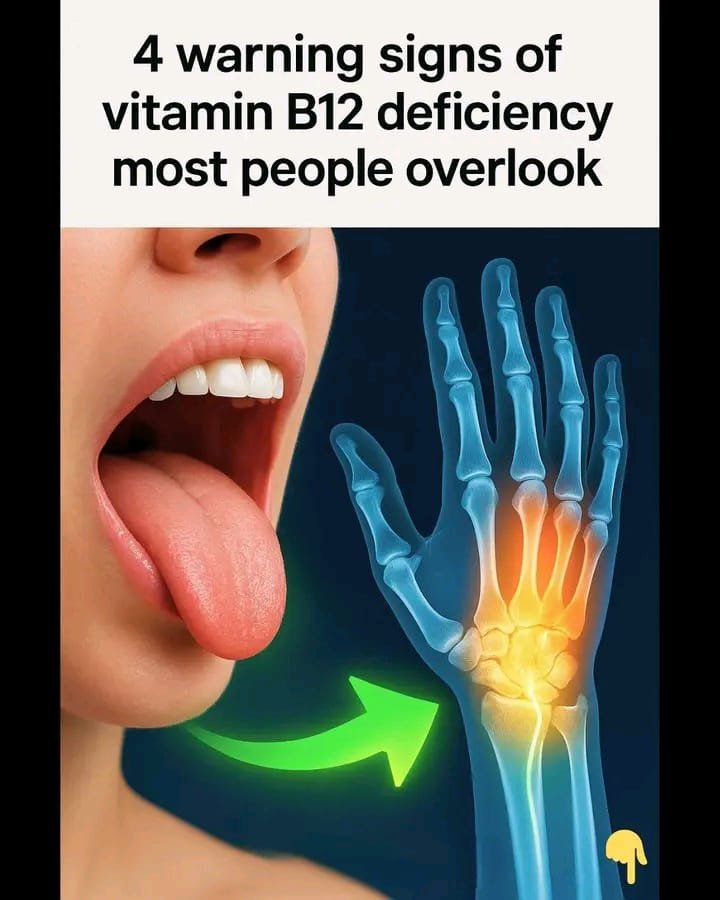
4 Alarming Symptoms of Vitamin B12 Deficiency You Should Never Ignore
Vitamin B12 is an essential nutrient that helps your body produce healthy red blood cells, maintain normal nerve function, and support brain health. When your body does not get or absorb enough of this vitamin, symptoms can develop gradually and may initially be mistaken for stress, aging, or ordinary tiredness.
Vitamin B12 deficiency is treatable, but delaying diagnosis can sometimes lead to lasting nerve damage. Recognizing the warning signs and seeking medical advice early can make an important difference. Source: NHS
Here are four important symptoms to recognize.
1. Persistent Fatigue and Unusual Weakness
Feeling exhausted after a busy day is normal. However, persistent fatigue that does not improve with adequate rest may be a sign of vitamin B12 deficiency.
Vitamin B12 helps the body produce healthy red blood cells, which carry oxygen throughout the body. When a deficiency causes anemia, your tissues may receive less oxygen than they need.
You may experience:
- Unusual tiredness or a lack of energy.
- Muscle weakness.
- Pale skin.
- Dizziness or lightheadedness.
- Shortness of breath during ordinary activities.
- A racing or noticeable heartbeat.
These symptoms can also result from other conditions, including iron deficiency, thyroid problems, and sleep disorders. If fatigue is persistent or unexplained, arrange a medical assessment rather than assuming you need more vitamins.
2. Tingling or Numbness in the Hands and Feet
One of the most important symptoms to take seriously is a tingling, prickling, or numb sensation in the hands or feet.
Vitamin B12 is necessary for the normal functioning of the nervous system. When levels are too low, nerves may become damaged, leading to sensations such as:
- Pins and needles in the fingers or toes.
- Reduced sensation in the feet.
- Burning or unusual nerve sensations.
- Muscle weakness.
- Difficulty sensing where your feet are when walking.
These symptoms can occur even when a person does not have anemia. In some cases, neurological problems can become permanent if the deficiency is not treated promptly.
Do not ignore persistent or worsening numbness. Seek medical advice, especially if you notice new weakness or changes in your ability to walk.
3. Balance Problems or Difficulty Walking
Vitamin B12 deficiency can affect the nerves involved in movement, coordination, and balance.
You might notice that you feel less steady when walking, have difficulty walking in the dark, or stumble more frequently than usual.
Other possible signs include:
- Unexplained falls.
- Poor coordination.
- A feeling of unsteadiness.
- Weakness in the legs.
- Difficulty walking normally.
Balance problems are particularly concerning in older adults because falls can cause serious injuries.
However, balance difficulties are not specific to vitamin B12 deficiency. Inner-ear disorders, medication effects, neurological conditions, and other medical problems can cause similar symptoms.
If balance problems develop gradually, arrange a medical assessment. If they begin suddenly, particularly with facial drooping, one-sided weakness, speech difficulties, or sudden vision changes, call emergency services immediately, as these can be signs of a stroke.
4. Memory Problems, Confusion, or Changes in Mood
Vitamin B12 supports normal brain and nervous system function. A deficiency can sometimes affect concentration, memory, and mood.
Possible symptoms include:
- Difficulty concentrating.
- Forgetfulness that is unusual for you.
- Feeling mentally slower than usual.
- Irritability or mood changes.
- Confusion in more severe cases.
These changes may be subtle at first and can have many possible causes, including medication effects, sleep problems, depression, and other medical conditions.
If you or a family member notices persistent, unexplained changes in memory or thinking, speak with a healthcare professional. Vitamin B12 deficiency is one possible cause worth investigating, but symptoms alone cannot establish the diagnosis.
What Causes Vitamin B12 Deficiency?
Vitamin B12 deficiency does not always mean someone has a poor diet. It can develop for several reasons, including:
- Insufficient dietary intake: Vitamin B12 is naturally found in foods such as fish, meat, eggs, and dairy products. People following a vegan diet need a reliable source from fortified foods or supplements.
- Problems with absorption: Conditions affecting the stomach or intestines can prevent the body from absorbing enough vitamin B12.
- Pernicious anemia: An autoimmune condition that interferes with vitamin B12 absorption.
- Certain medications: Metformin and some medicines that reduce stomach acid can contribute to low B12 levels in some people.
- Previous stomach or intestinal surgery: Certain procedures can reduce the body’s ability to absorb the vitamin.
Older adults may be at increased risk because absorption can become less efficient with age. Source: NIH Office of Dietary Supplements
How Is Vitamin B12 Deficiency Diagnosed?
A healthcare professional will consider your symptoms, medical history, diet, and medications. Blood tests can help assess vitamin B12 levels and check for anemia.
Depending on the results, additional tests may be needed to investigate the cause.
Treatment depends on the reason for the deficiency. Some people benefit from oral supplements, while others may need vitamin B12 injections, particularly when absorption is impaired or neurological symptoms are present.
Do not rely on symptoms alone or take high-dose supplements as a substitute for proper assessment.
Foods That Provide Vitamin B12
<text> </text>
A balanced diet can help provide vitamin B12 if your body absorbs it properly. Useful sources include:
- Fish and seafood.
- Meat and poultry.
- Eggs.
- Milk, yogurt, and cheese.
- Fortified breakfast cereals and fortified nutritional products.
People who follow a vegan diet should check food labels carefully and use a reliable fortified food or supplement source when necessary.
If a deficiency is caused by poor absorption, dietary changes alone may not be enough to correct it.
Final Thoughts
Persistent fatigue, tingling or numbness, balance difficulties, and unexplained changes in memory or mood can all be associated with vitamin B12 deficiency. These symptoms are not proof that your B12 level is low, but they deserve attention, particularly when they persist or worsen.
Early diagnosis and appropriate treatment can improve many symptoms and help prevent complications.
If you recognize these warning signs in yourself or a loved one, contact a healthcare professional and ask whether testing is appropriate.
Medical disclaimer: This article is for educational purposes only and does not replace professional medical advice, diagnosis, or treatment. Sudden neurological symptoms require emergency evaluation.
Sources
- NHS — Vitamin B12 or folate deficiency anemia
- NIH Office of Dietary Supplements — Vitamin B12
- MedlinePlus — Vitamin B12 deficiency anemia
Remove the stray placeholder textMake the headline less alarmist