
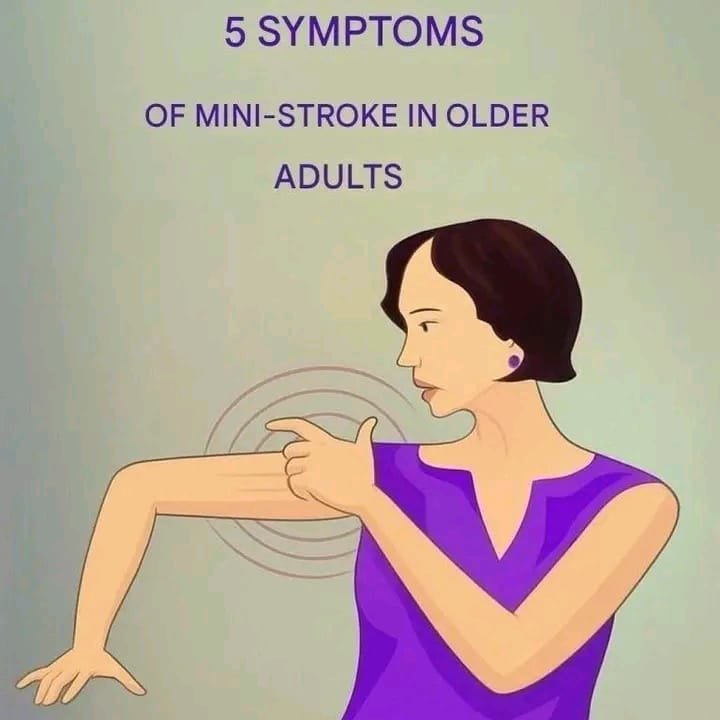
5 Symptoms of a Mini-Stroke in Older Adults That Should Never Be Ignored
A sudden change in speech, vision, balance, or strength can be more than a normal part of aging. It may be a warning sign of a transient ischemic attack (TIA), commonly known as a mini-stroke.
A TIA occurs when blood flow to part of the brain is temporarily interrupted. Its symptoms may disappear within minutes, but that does not mean the danger has passed. A TIA can signal an increased risk of a future stroke and requires urgent medical evaluation. CDC · American Stroke Association
Older adults and their families should learn to recognize these five important warning signs.
1. Sudden Weakness or Numbness on One Side of the Body
One of the most recognizable symptoms is sudden weakness or numbness affecting one side of the face, arm, or leg.
You might notice that an older adult:
- Cannot raise one arm normally.
- Drops objects unexpectedly.
- Has difficulty standing or walking.
- Experiences numbness on one side of the face or body.
These symptoms can occur without pain. Even if the weakness lasts only a few minutes and then disappears, it should never be ignored.
2. Difficulty Speaking or Understanding Words
A mini-stroke can interfere with the brain areas responsible for language and communication.
Possible signs include:
- Slurred or unclear speech.
- Difficulty finding familiar words.
- Suddenly speaking in a confused or unusual way.
- Trouble understanding simple questions or instructions.
If someone suddenly struggles to speak or understand you, do not assume they are simply tired, distracted, or confused because of their age.
Sudden language difficulties require emergency assessment.
3. Sudden Vision Changes
A temporary interruption in blood flow can affect vision in one or both eyes.
Watch for sudden:
- Blurred vision.
- Double vision.
- Partial or complete loss of vision.
- Difficulty seeing clearly while walking or recognizing objects.
Some people describe the experience as a curtain coming down over one eye. Others notice that their surroundings suddenly appear doubled or distorted.
Even if normal vision returns quickly, sudden unexplained vision loss or other new vision changes may be a warning sign of a TIA or stroke.
4. Sudden Dizziness, Loss of Balance, or Trouble Walking
Older adults may sometimes experience dizziness for many reasons. However, sudden dizziness accompanied by loss of balance, coordination problems, or difficulty walking can indicate a stroke or TIA.
Warning signs may include:
- Suddenly stumbling or veering to one side.
- Being unable to walk steadily.
- Losing coordination.
- Experiencing sudden severe dizziness with other neurological symptoms.
Do not automatically attribute a sudden change in balance to aging, dehydration, or an existing mobility problem. A healthcare professional needs to determine the cause.
5. Sudden Confusion or an Unusual Severe Headache
A mini-stroke may cause sudden confusion, difficulty understanding conversations, or trouble following familiar routines.
A sudden, unusually severe headache can also be a warning sign of a stroke, particularly when it occurs alongside weakness, vision changes, confusion, or difficulty speaking.
Seek emergency help for sudden neurological changes or a severe headache that is unusual for the person. A severe headache may have causes other than stroke, including conditions that are themselves emergencies.
What Should You Do If These Symptoms Appear?
Do not wait to see whether the symptoms disappear. Call your local emergency number immediately.
Follow these steps:
- Call for emergency medical help. A suspected TIA and a suspected stroke both need urgent assessment.
- Record when the symptoms began. If the exact time is unknown, note when the person was last seen behaving normally.
- Do not let the person drive. Request emergency transport.
- Do not give aspirin or other medication unless a medical professional instructs you to. Some strokes involve bleeding, and the appropriate treatment depends on the cause.
- Get medical help even if the person feels normal again. Symptoms that resolve can still indicate a TIA.
In the early stages, it is not possible to reliably distinguish a TIA from a full stroke based on symptoms alone. NHS
Remember the B.E. F.A.S.T. Warning Signs
The American Stroke Association recommends using B.E. F.A.S.T. to recognize common stroke symptoms:
- B — Balance: Sudden loss of balance or coordination.
- E — Eyes: Sudden vision changes.
- F — Face: One side of the face droops.
- A — Arms: Weakness or numbness in an arm.
- S — Speech: Slurred speech or difficulty understanding.
- T — Time: Call emergency services immediately.
Learn more from the American Stroke Association’s stroke warning signs guide.
Can a Mini-Stroke Be Prevented From Becoming a Major Stroke?
Prompt medical evaluation can help doctors identify the cause of a TIA and reduce the risk of a future stroke.
Depending on the individual’s condition, treatment may include managing high blood pressure, controlling diabetes and cholesterol, treating certain heart rhythm problems, stopping smoking, and using prescribed medicines to prevent blood clots.
The right treatment depends on the cause and the person’s medical history. Never start or stop medication without professional guidance.
Final Thoughts
Sudden weakness on one side, speech difficulties, vision changes, loss of balance, and confusion are symptoms that older adults and their families should take seriously. A mini-stroke may leave no lasting symptoms, but it can be an important warning that the brain’s blood supply has been interrupted.
The most important rule is simple: act immediately, even if the symptoms disappear. Fast medical assessment may help prevent a more serious event and protect the person’s long-term health.
Medical disclaimer: This article is for educational purposes and is not a substitute for professional medical advice, diagnosis, or treatment. Suspected stroke or TIA symptoms are a medical emergency.
Make the emergency callout impossible to missClarify that TIA symptoms can mimic stroke