
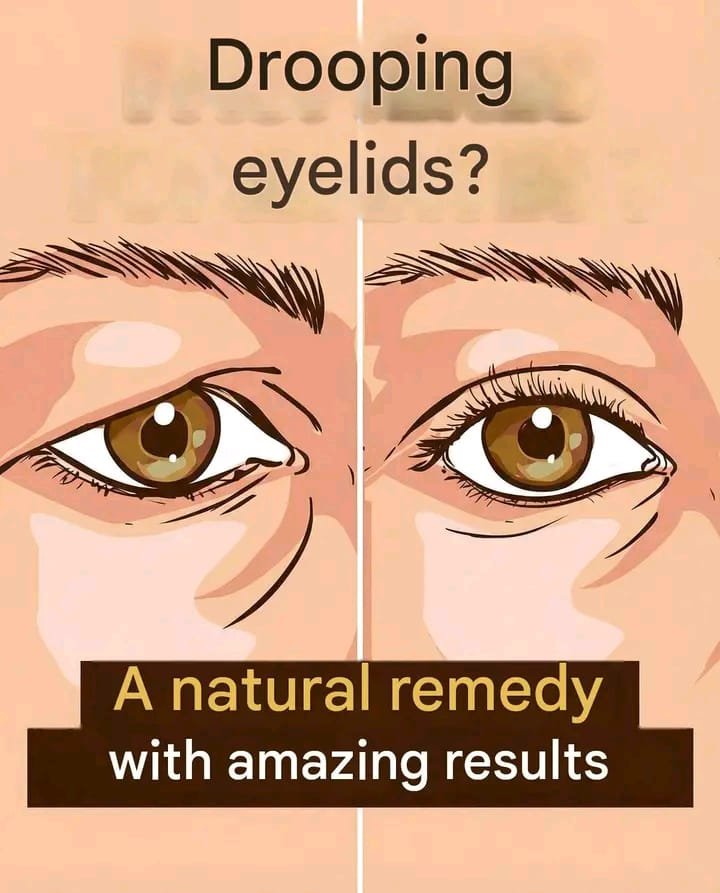
Have you noticed your upper eyelids beginning to sag, making your eyes look tired or older than you feel? Droopy eyelids are a common concern, particularly as we age. While some changes are related to normal aging, others may result from weakened eyelid muscles, swelling, or an underlying medical condition.
The good news is that several simple habits can help improve the appearance of puffy or tired-looking eyes. However, it is important to understand that natural remedies cannot reliably lift a genuinely drooping eyelid. Knowing the cause is the first step toward finding the right solution.
What Causes Droopy Eyelids?
The medical term for a drooping upper eyelid is ptosis. It occurs when the eyelid sits lower than normal, often because the muscle or nerves responsible for lifting it are not working properly.
Sometimes, the problem is excess skin around the upper eyelid rather than weakness of the eyelid-lifting muscle.
Common causes include:
- Aging: Skin loses elasticity, and the structures supporting the eyelids can weaken over time.
- Genetics: Some people naturally have heavier or lower-set eyelids.
- Swelling and fluid retention: Allergies, irritation, or a lack of sleep can make eyelids look puffy or heavy.
- Eye rubbing: Frequent rubbing may irritate the skin and contribute to mechanical stress around the eyelids.
- Medical conditions: Certain nerve, muscle, or eye disorders can cause drooping.
Because these causes require different approaches, persistent or newly developed drooping should not automatically be treated as a cosmetic issue. <Cite refs={[“turn678575search0″,”turn678575search1”]}/>
1. Use a Cool Compress to Reduce Puffiness
If your eyelids look heavy because of temporary swelling, a cool compress may help reduce puffiness.
How to try it:
- Wet a clean, soft washcloth with cool water.
- Gently place it over your closed eyes for several minutes.
- Remove it and pat the surrounding skin dry.
Avoid applying ice directly to your eyelids or pressing firmly on your eyes.
Keep in mind that a cool compress may temporarily improve swelling, but it will not repair weakened eyelid muscles or remove excess skin.
2. Get Enough Sleep
Insufficient sleep can make the area around your eyes appear tired or puffy. Maintaining a consistent sleep schedule may help improve the overall appearance of your face.
Try to:
- Keep regular sleeping and waking times.
- Create a dark, quiet sleeping environment.
- Reduce screen use before bedtime if it interferes with your sleep.
- Address persistent sleep difficulties with a healthcare professional.
Better sleep can help with tired-looking eyes, but it does not reverse structural eyelid drooping.
3. Stay Hydrated and Eat a Balanced Diet
Drinking enough water supports normal bodily functions, while a balanced diet provides nutrients needed for healthy skin.
Include foods such as:
- Citrus fruits, berries, and peppers for vitamin C.
- Eggs, beans, fish, and other sources of protein.
- Nuts, seeds, and olive oil for healthy fats.
- A variety of vegetables and whole grains.
No particular food or drink has been proven to lift drooping eyelids. Be cautious of products claiming that a special drink, supplement, or detox remedy can tighten eyelid muscles overnight.
4. Protect the Delicate Skin Around Your Eyes
Sun exposure contributes to premature skin aging. Protecting the skin around your eyes can help maintain its appearance over time.
Consider these habits:
- Wear sunglasses that provide UV protection.
- Use a broad-spectrum sunscreen suitable for the skin around your eyes, following the product instructions.
- Apply a gentle moisturizer if the area is dry.
- Avoid harsh exfoliants and irritating products near the eyes.
- Do not pull or stretch the eyelid skin when applying cosmetics.
These measures support skin health but cannot correct true ptosis.
5. Be Careful With Eyelid Exercises and Home Remedies
You may see online advice recommending eyelid exercises, facial massage, egg whites, or homemade tightening masks.
However, there is insufficient reliable evidence that these remedies can permanently lift drooping eyelids. Some ingredients may also cause irritation or allergic reactions, particularly when used close to the eyes.
Avoid putting lemon juice, essential oils, baking soda, or unapproved products on your eyelids. Do not use adhesive eyelid tapes in a way that irritates the skin or interferes with normal blinking.
If you are concerned about persistent drooping, an eye specialist can help determine which treatments are appropriate.
6. What Medical Treatments Are Available?
Treatment depends on the cause and severity of the drooping.
For excess skin: A specialist may discuss upper eyelid surgery, known as blepharoplasty, when appropriate.
For true ptosis: Surgery may be recommended to strengthen or reposition the eyelid-lifting muscle, particularly if the eyelid obstructs vision.
For selected adults: Prescription oxymetazoline eye drops may temporarily improve eyelid height in some cases of acquired ptosis. They do not work for every cause and should be discussed with an eye specialist.
If an underlying medical condition is responsible, treating that condition may be necessary. <Cite refs={[“turn678575search1″,”turn678575search10”]}/>
7. When Should You See a Doctor?
Arrange an appointment with an ophthalmologist if your eyelids gradually become more droopy, your vision is affected, or the change concerns you.
Seek urgent medical assessment if the drooping is new or changes rapidly.
Sudden eyelid drooping can be a medical emergency. Call your local emergency service immediately if it occurs with double vision, unequal pupils, a severe headache, facial weakness, difficulty speaking, or weakness in an arm or leg. Do not wait to see whether a home remedy helps. <Cite refs={[“turn678575search3″,”turn678575search6”]}/>
Children with drooping eyelids should also be assessed promptly because severe ptosis can interfere with normal vision development.
Final Thoughts
Droopy eyelids can result from normal aging, excess skin, temporary puffiness, or medical conditions affecting the muscles and nerves around the eyes.
Simple habits such as using a cool compress for swelling, getting adequate sleep, eating a balanced diet, and protecting your skin may improve the appearance of tired-looking eyes. However, they cannot reliably correct true eyelid ptosis.
The most important step is identifying the cause. If your eyelids are persistently drooping, affecting your vision, or changing suddenly, seek professional advice rather than relying on unproven natural remedies.
Medical Disclaimer
This article is for educational purposes only and does not replace an examination or personalized advice from a qualified healthcare professional.
Sources
- MedlinePlus: Eyelid Drooping
- Cleveland Clinic: Ptosis (Droopy Eyelid)
- Harvard Health: Drooping Eyelid (Ptosis)
- North American Neuro-Ophthalmology Society: Droopy Eyelids
Add a stronger emergency warning boxClarify ptosis versus excess skin
Droopy Eyelids: Natural Ways to Improve Their Appearance and When to See a Doctor
Have you noticed your upper eyelids beginning to sag, making your eyes look tired or older than you feel? Droopy eyelids are a common concern, particularly as we age. While some changes are related to normal aging, others may result from weakened eyelid muscles, swelling, or an underlying medical condition.
The good news is that several simple habits can help improve the appearance of puffy or tired-looking eyes. However, it is important to understand that natural remedies cannot reliably lift a genuinely drooping eyelid. Knowing the cause is the first step toward finding the right solution.
What Causes Droopy Eyelids?
The medical term for a drooping upper eyelid is ptosis. It occurs when the eyelid sits lower than normal, often because the muscle or nerves responsible for lifting it are not working properly.
Sometimes, the problem is excess skin around the upper eyelid rather than weakness of the eyelid-lifting muscle.
Common causes include:
- Aging: Skin loses elasticity, and the structures supporting the eyelids can weaken over time.
- Genetics: Some people naturally have heavier or lower-set eyelids.
- Swelling and fluid retention: Allergies, irritation, or a lack of sleep can make eyelids look puffy or heavy.
- Eye rubbing: Frequent rubbing may irritate the skin and contribute to mechanical stress around the eyelids.
- Medical conditions: Certain nerve, muscle, or eye disorders can cause drooping.
Because these causes require different approaches, persistent or newly developed drooping should not automatically be treated as a cosmetic issue. <Cite refs={[“turn678575search0″,”turn678575search1”]}/>
1. Use a Cool Compress to Reduce Puffiness
If your eyelids look heavy because of temporary swelling, a cool compress may help reduce puffiness.
How to try it:
- Wet a clean, soft washcloth with cool water.
- Gently place it over your closed eyes for several minutes.
- Remove it and pat the surrounding skin dry.
Avoid applying ice directly to your eyelids or pressing firmly on your eyes.
Keep in mind that a cool compress may temporarily improve swelling, but it will not repair weakened eyelid muscles or remove excess skin.
2. Get Enough Sleep
Insufficient sleep can make the area around your eyes appear tired or puffy. Maintaining a consistent sleep schedule may help improve the overall appearance of your face.
Try to:
- Keep regular sleeping and waking times.
- Create a dark, quiet sleeping environment.
- Reduce screen use before bedtime if it interferes with your sleep.
- Address persistent sleep difficulties with a healthcare professional.
Better sleep can help with tired-looking eyes, but it does not reverse structural eyelid drooping.
3. Stay Hydrated and Eat a Balanced Diet
Drinking enough water supports normal bodily functions, while a balanced diet provides nutrients needed for healthy skin.
Include foods such as:
- Citrus fruits, berries, and peppers for vitamin C.
- Eggs, beans, fish, and other sources of protein.
- Nuts, seeds, and olive oil for healthy fats.
- A variety of vegetables and whole grains.
No particular food or drink has been proven to lift drooping eyelids. Be cautious of products claiming that a special drink, supplement, or detox remedy can tighten eyelid muscles overnight.
4. Protect the Delicate Skin Around Your Eyes
Sun exposure contributes to premature skin aging. Protecting the skin around your eyes can help maintain its appearance over time.
Consider these habits:
- Wear sunglasses that provide UV protection.
- Use a broad-spectrum sunscreen suitable for the skin around your eyes, following the product instructions.
- Apply a gentle moisturizer if the area is dry.
- Avoid harsh exfoliants and irritating products near the eyes.
- Do not pull or stretch the eyelid skin when applying cosmetics.
These measures support skin health but cannot correct true ptosis.
5. Be Careful With Eyelid Exercises and Home Remedies
You may see online advice recommending eyelid exercises, facial massage, egg whites, or homemade tightening masks.
However, there is insufficient reliable evidence that these remedies can permanently lift drooping eyelids. Some ingredients may also cause irritation or allergic reactions, particularly when used close to the eyes.
Avoid putting lemon juice, essential oils, baking soda, or unapproved products on your eyelids. Do not use adhesive eyelid tapes in a way that irritates the skin or interferes with normal blinking.
If you are concerned about persistent drooping, an eye specialist can help determine which treatments are appropriate.
6. What Medical Treatments Are Available?
Treatment depends on the cause and severity of the drooping.
For excess skin: A specialist may discuss upper eyelid surgery, known as blepharoplasty, when appropriate.
For true ptosis: Surgery may be recommended to strengthen or reposition the eyelid-lifting muscle, particularly if the eyelid obstructs vision.
For selected adults: Prescription oxymetazoline eye drops may temporarily improve eyelid height in some cases of acquired ptosis. They do not work for every cause and should be discussed with an eye specialist.
If an underlying medical condition is responsible, treating that condition may be necessary. <Cite refs={[“turn678575search1″,”turn678575search10”]}/>
7. When Should You See a Doctor?
Arrange an appointment with an ophthalmologist if your eyelids gradually become more droopy, your vision is affected, or the change concerns you.
Seek urgent medical assessment if the drooping is new or changes rapidly.
Sudden eyelid drooping can be a medical emergency. Call your local emergency service immediately if it occurs with double vision, unequal pupils, a severe headache, facial weakness, difficulty speaking, or weakness in an arm or leg. Do not wait to see whether a home remedy helps. <Cite refs={[“turn678575search3″,”turn678575search6”]}/>
Children with drooping eyelids should also be assessed promptly because severe ptosis can interfere with normal vision development.
Final Thoughts
Droopy eyelids can result from normal aging, excess skin, temporary puffiness, or medical conditions affecting the muscles and nerves around the eyes.
Simple habits such as using a cool compress for swelling, getting adequate sleep, eating a balanced diet, and protecting your skin may improve the appearance of tired-looking eyes. However, they cannot reliably correct true eyelid ptosis.
The most important step is identifying the cause. If your eyelids are persistently drooping, affecting your vision, or changing suddenly, seek professional advice rather than relying on unproven natural remedies.
Medical Disclaimer
This article is for educational purposes only and does not replace an examination or personalized advice from a qualified healthcare professional.
Sources
- MedlinePlus: Eyelid Drooping
- Cleveland Clinic: Ptosis (Droopy Eyelid)
- Harvard Health: Drooping Eyelid (Ptosis)
- North American Neuro-Ophthalmology Society: Droopy Eyelids
Add a stronger emergency warning boxClarify ptosis versus excess skin